












Iranian Foreign Minister: If Trump’s ‘pets’ are not checked in Tel Aviv, ‘Iran will educate them’
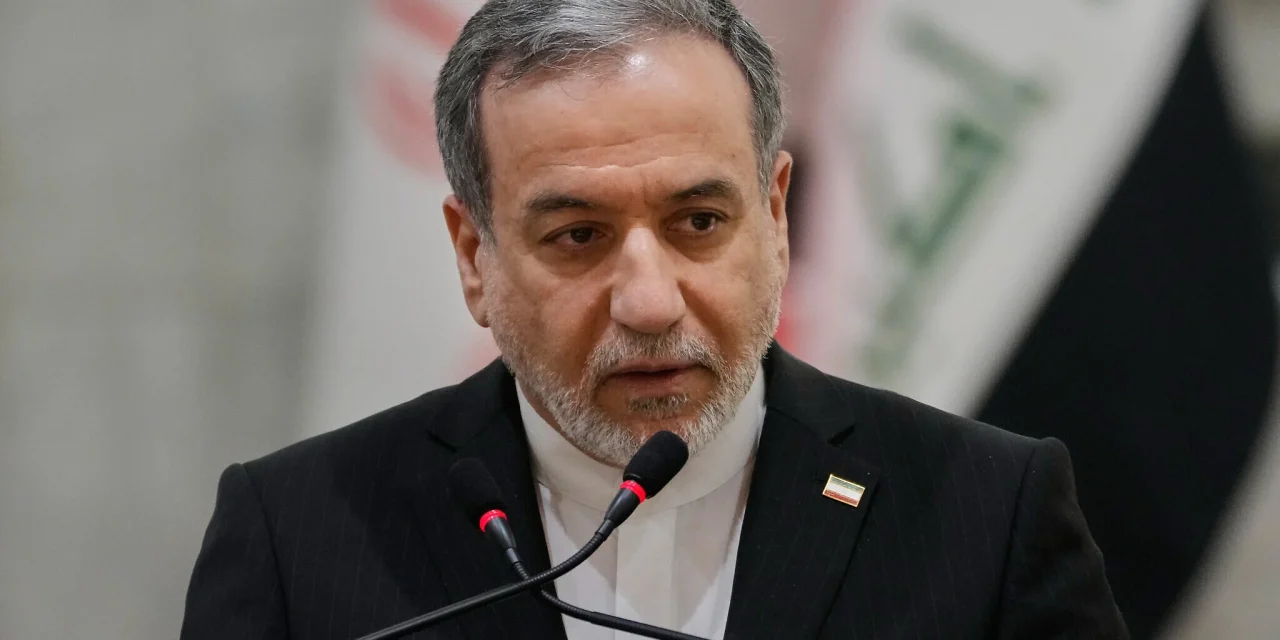
Responding to Defense Minister Israel Katz’s comments, Iranian Foreign Minister Abbas Araghchi warned on Wednesday that the U.S.-Iran Memorandum of Understanding requires the U.S. to “muzzle its darlings in Tel Aviv” and prevent Israel from threatening Iran militarily.
“The terms of the Islamabad MoU are crystal clear and visible to all. POTUS has required the US to muzzle its favorites in Tel Aviv,” Araghchi warned in a post on X.
“If they ignore their master, Iran will train them. Any threat against our people and leadership will receive an immediate, forceful response,” Iran’s top envoy wrote.
The comments came in response to remarks Katz made in a briefing with Israeli military reporters on Monday in which he warned that Iran’s Supreme Leader Mojtaba Khamenei is “sentenced to death” and that while Tehran is trying to “force concessions” in its talks with Washington, “Israel will not allow Iran to develop nuclear weapons. If an agreement achieves that, all the better.”
While the MOU stated that the United States, Iran “and their allies” would cease hostilities “on all fronts,” Israeli officials stressed that Jerusalem is not a signatory to the deal and vowed to continue preventing Iran from acquiring a nuclear weapon, even as Washington emphasized its pursuit of a “regional ceasefire” and its preference for a diplomatic solution to the conflict.
Get the daily edition of The Times of Israel
by email and never miss our top stories
By registering you agree to the terms and conditions
Meanwhile, while the US and Iran were set to hold a new round of indirect talks in Doha, two Iranian sources said Tehran was determined to gain international recognition of its control over the Strait of Hormuz and the ability to collect fees from ships entering or leaving the Gulf, even if it had to be done by force.
Defense Minister Israel Katz attends the Muni Expo 2026 conference in Tel Aviv on June 24, 2026 (Avshalom Sassoni/Flash90)
Under the interim deal reached with the United States earlier this month, Iran agreed to allow ships to pass through the strait free of charge for 60 days. But they expect the wording of the agreement to allow it to retain control over which ships are allowed to pass and which route they take through the narrow waterway, the sources said.
It is also committed to formally accepting this control on a permanent basis after the end of the transition period, and its negotiators will not move on to other issues in ongoing talks with Washington until this is agreed, the sources said.
If the interim agreement ends without being renewed, Iran could start charging ships for transit from mid-August. However, Iran has not yet provided a list of what fees it will charge and how.
Any permanent Iranian control of the Strait of Hormuz, with formalities and fees for ships, would impose additional costs, delays and risks on all shipping through a waterway that before the war transported a fifth of the world’s energy supplies and other essential goods.
No fees have ever been charged for passage through the strait, and Tehran’s position is in direct contradiction to U.S. interpretations of the interim memorandum of understanding agreed on June 17 and Washington’s stance on the final postwar arrangements.
An F-16 fighter jet flies over an unspecified area in the Middle East, in an image released June 25, 2026. (CENTCOM)
US President Donald Trump said last week that tolls would not be charged for passage through the strait unless Washington decided to impose them itself. U.S. Secretary of State Marco Rubio said in a meeting with Gulf states that no country has the right to block shipping or impose fees or tolls for passage through an international waterway.
Iran is prepared to use force to enforce its demands on the strait if other countries do not accept its terms, the Iranian official added, saying Tehran would not back down even if it led to a renewed – and intensified – confrontation with the US.
The second senior Iranian official said Iran believed it had a “historic chance” to secure a long-term advantage after surviving what Tehran had seen as its biggest potential threat – a war with the United States and Israel.
Ship-owning countries would ultimately accept Iran’s management of the strait due to the rising costs of the dispute, and Washington would accept this to ensure uninterrupted global energy supplies, the official added.
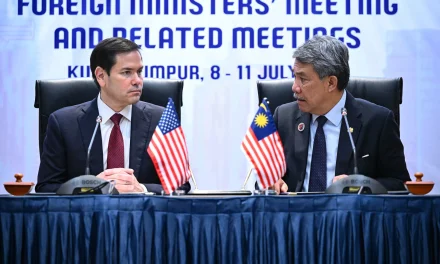
U.S. Secretary of State Marco Rubio (C-Top) attends a meeting with foreign ministers of Gulf Cooperation Council member states to discuss the U.S.-Iran interim agreement with Arab Gulf allies during his visit to the Middle East in Manama, June 25, 2026. (Eric Lee/POOL/AFP)
The comments came as Iran and the United States were set to hold further indirect talks with mediators in Doha on Wednesday to advance negotiations and ease tensions following exchanges of fire between the two sides.
The sides would take part in “indirect technical talks on Wednesday in Doha with Qatari and Pakistani mediators,” a diplomat with knowledge of the talks told AFP on condition of anonymity.
The talks, held at a lower level and focused on the details of the MOU, will “build on the progress made at the Lake Lucerne Summit,” the diplomat added.
An Iranian official told Reuters that the talks actually began on Tuesday evening, and a source familiar with the discussions said they were structured as meetings between chief negotiators and specialists.
Police personnel ride past the national flags of Pakistan and Iran flying in front of the Presidential House in Islamabad on June 22, 2026, on the eve of Iranian President Masoud Pezeshkian’s visit to Pakistan as part of U.S.-Iran peace talks. (Aamir QURESHI / AFP)
The memorandum of understanding, tested by recent exchanges of fire between the sides, includes a 60-day ceasefire to halt the war that erupted with U.S.-Israeli attacks against the Iranian regime in late February, as well as the reopening of the Strait of Hormuz and a time frame for a final agreement to permanently end the conflict and reach agreement on Iran’s nuclear program. The Wall Street Journal reported on Wednesday that Trump had told his advisers that he believed the deadline could be postponed.
Israel was not involved in the negotiations over the Memorandum of Understanding and Prime Minister Benjamin Netanyahu has distanced himself from it. Still, the terms of the escape clause, which permanently ends the war and precludes any resumption, claim that it is binding on the United States, Iran “and their allies.” Israeli officials are bitterly opposed to the deal’s terms, which do not resolve any of the war’s main objectives – notably eliminating Iran’s nuclear and missile programs and creating the conditions for the regime’s collapse.
We cannot do this work alone.
The war with Iran was a burden for all of us in Israel. But when I heard about a high-casualty incident—ballistic missile strikes in Arad and Dimona that injured nearly 200 people—I drank a cup of coffee, packed a bag, and headed south.
There I spoke to Shilgit, the head of an after-school program for disadvantaged young people. Standing in front of her destroyed center, Shilgit said it was a miracle that no children had been hurt and spoke of how the community had come together in the hours since.
As a reporter for The Times of Israel, I am committed to telling stories of resilience like Shilgit’s. But my colleagues and I cannot do this alone. If you value such work, Please consider joining our reader support group, the Times of Israel Community. Your financial support is essential to sustaining truly human reporting like this.
— Stav Levaton, military reporter
Yes, I will join. Yes, I will join. Already a member? Log in to stop seeing this
You are a dedicated reader
That’s why we created The Times of Israel, to provide discerning readers like you with essential coverage of Israel and the Jewish world.
So now we have a request. Unlike other news outlets, we have not set up a paywall. But because the journalism we do is expensive, we invite readers who care about The Times of Israel to support our work by subscribing The Times of the Israel Community.
For just $6 a month you can support our quality journalism while enjoying The Times of Israel AD FREEas well as access exclusive content Available only to members of the Times of Israel community.
Thank you very much,
David Horovitz, founding editor of The Times of Israel
Join our community. Join our community. Are you already a member? Log in to stop seeing this