

















Uber lets Israeli AI startup take the lead for Munich robotaxi test run
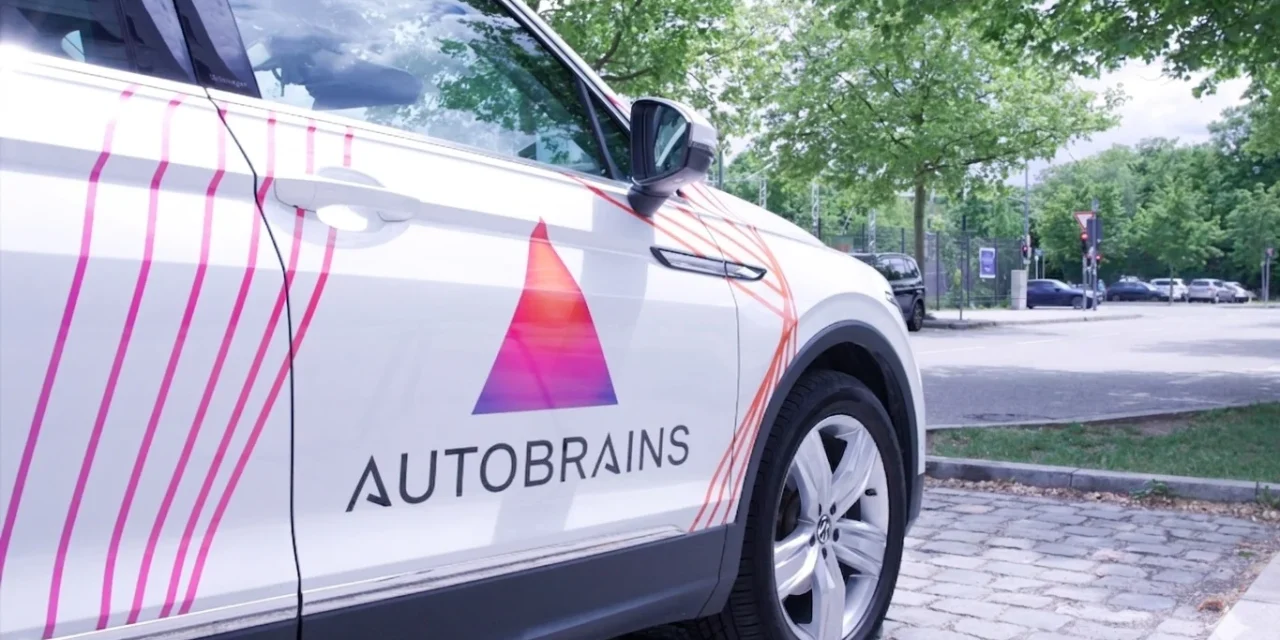
Ride-hailing app Uber has tapped Israeli autonomous driving startup Autobrains and US chipmaker Nvidia for a pilot program that aims to bring driverless robotaxis to the streets of the German city of Munich.
The project marks the first major testing ground for Autobrains, which is developing self-learning artificial intelligence technology for assisted and autonomous driving, as Uber seeks to join a fast-growing competition to expand autonomous driving operations.
For at least a decade, tech titans including Tesla’s Elon Musk have made big promises about making self-driving, autonomous cars a reality for the public.
While self-driving cars are not yet offered to consumers, robotaxis have been introduced in several US cities, led by Google’s sister Waymo, with a fleet of 3,000 self-driving vehicles providing about 500,000 rides per week. Its main competitor Tesla, currently only available in a few cities in Texas, plans to expand to several more metropolitan areas across the country.
In contrast, Europe has lagged far behind due to strict safety regulations and regulatory bottlenecks, as well as a culture reliant on public transport. But as the continent pushes to allow AI-powered taxis on its roads, ride-sharing app Uber is positioning itself as one of the first to enter the market.
Sign up for the Tech Israel Daily
and never miss Israel’s top tech stories
By registering you agree to the terms and conditions
After several years of delays, Germany, Italy, France and 15 other European Union countries signed a joint declaration in early June on cross-border coordination of autonomous vehicle testing, intended to ease the regulatory path and adoption of the technology across Europe.
Uber has bet on some autonomous AI technology companies that could compete with companies like Waymo and spur large-scale commercial adoption of autonomous vehicles, which has been more difficult than expected due to high costs, safety issues and strict regulations. Among other things, the company has launched robotaxis with Chinese AI companies WeRide in Spain and Pony.Ai in Croatia, as well as other pilots in the Gulf region.
Illustration of WeRide and Uber’s Robotaxi GXR in Madrid, Spain. (Business Wire)
Earlier this month, the San Francisco-based company teamed up with Autobrains, the developer of self-learning artificial intelligence technology for assisted and autonomous driving, for its latest project, this time in Germany.
Autobrain’s autonomous driving software system takes a different approach to other self-driving technologies, relying on multiple specialized AI agents to handle the various processes involved in driving to create a system that is both safer and more cost-effective.
“For automakers and autonomy developers, the challenge is not just to build autonomous vehicles, but to integrate them into a commercial network where they can reliably serve riders at scale,” said Sarfraz Maredia, Uber’s global head of autonomous mobility and delivery. “This program creates a new way to achieve this by combining vehicle-agnostic autonomy, leading AI computation and Uber’s ride-hailing platform.”
By reducing the computing power required to operate the self-driving vehicle – a major obstacle to expanding autonomous driving – the Uber robotaxis planned for Munich only requires an affordable, off-the-shelf Nvidia chip and six cameras that cover the same field of view as a human, according to Autobrains founder and CEO Igal Raichelgauz.
“Autonomous driving cannot scale if you rely on a single model to solve every driving scenario,” said Raichelgauz. “Our autonomous driving system uses AI agents, similar to a set of specialized drivers, summoned on the fly to assess various traffic situations on the road and make real-time decisions, whether entering a roundabout, overtaking a truck or driving on the highway on a rainy day.”
Autobrains founder and CEO Igal Raichelgauz. (Courtesy of Autobrains)
Unlike many of its competitors that rely on a single, monolithic AI model to handle all driving tasks, Autobrains uses a series of specialized AI agents that work together to control the vehicles using standard automotive sensors. One agent senses and evaluates what is happening around the car, while another uses reason to assess the risks associated with each movement, and another selects the reactions in real time.
Other systems like Mobileye, Israel’s leading manufacturer of self-driving car technology, use machine learning by teaching and training computers to recognize objects and scenarios by feeding them millions of images and data. The process is labor-intensive and requires very high computing power.
Raichelgauz argued that Autobrains’ orchestrated system can handle road uncertainties more accurately and safely than the other model.
“Even the most expensive and advanced system like Waymo cannot go beyond what it has been shown or trained to do, and that is the gap we are bridging with agent AI and the common sense embedded in those agents,” Raichelgauz said. “Our system is designed to learn and improve through reasoning and reflection, not through extensive data or calculations.”
Mor Kaspi, head of the Shlomo Shmeltzer Institute for Smart Transportation at Tel Aviv University, warned that the problems with expanding autonomous vehicles go far beyond the inner workings of the self-driving system.
“Even if technology significantly advances the brains of autonomous vehicles, it’s not enough to put these vehicles on the road – the vehicles need to be cheap enough for services to use them or for the government to invest in them,” he said.
Passengers try to figure out why a driverless Waymo taxi won’t move as traffic piles up behind it in San Francisco, Feb. 15, 2023. (AP Photo/Terry Chea)
“In addition, there are also psychological, social, moral, regulatory and legal aspects, and they all need to be solved so that we can see autonomous vehicles on our roads on a large scale,” Kaspi added.
Raichelgauz said the Autobrains system does not require a special vehicle equipped with custom sensors and also offers other cost savings.
“Our autonomous driving technology can be built into a regular car, does not rely on a fleet of customized vehicles, and eliminates the need for heavy and expensive sensor stacks or other requirements for infrastructure work such as high-resolution mapping, which are cost barriers to large-scale commercialization of robotaxis,” he said. “For mapping, we use AI technology that compares satellite aerial images with vehicle camera data.”
Autobrains was founded in 2019 by Raichelgauz as a spin-off from Cortica Group, an autonomous AI technology company he co-founded with brain science specialist Karina Odinaev and computer vision and neuroscience professor Josh Zeevi.
“The idea was to develop AI for the physical world based on the human brain,” said Raichelgauz, an electrical engineering graduate at the Technion – Israel Institute of Technology in Haifa and a veteran of the Israeli Army’s elite Unit 8200. “One of its main features is that it is not a single neural network, but many specialized networks, and an orchestration process is underway, so the entire inspiration for our technology is based on the activity of neurons and learning mechanisms in the brain.”
An autonomous taxi powered by Mobileye’s driving technology and Moovit’s ride-hailing app in Tel Aviv-Jaffa, September 2021. (Mobileye/Intel)
With offices in Tel Aviv and Munich, Autobrains employs around 100 AI experts with backgrounds in neuroscience, quantum physics, autonomous driving and software development. To date, the startup has raised around $140 million from investors including Temasek, BMW i Ventures, Toyota Ventures, Continental, Knorr-Bremse and VinFast.
The Munich pilot is intended to serve as a test platform for developing a model for deploying autonomous robotaxi fleets in several dozen cities worldwide, subject to regulatory approvals and safety certifications and assuming the technology works and is commercially viable.
“We have a plan to expand to 20 cities by 2028, and Munich is a good benchmark,” said Raichelgauz. “The focus for us will be heavily on Europe and South Asia.”
A public bus seen in June 2012 in the German city of Munich. (CC BY 3.0 de, High Contrast, Wikimedia Commons)
He said the company had applied for a permit to test the driverless taxis in Israel as well.
Although Uber and Autobrains did not give a specific timeline for when passengers in Munich will be able to order autonomous robot taxis via the ride-hailing app, Raichelgauz said the process will be “short and aggressive” once authorities have given the necessary regulatory green lights.
“After many tests, we received approval from local authorities to operate the system with a test driver, but still not with commercial passengers,” Raichelgauz said. “The next step would be to integrate the system into Uber’s ride-hailing fleet and scale the number of cars to carry passengers, but still with the human test driver for a period of time.”
“The final step is to phase out the human test driver,” he added.
Uber car (Skoda) in Warsaw, Poland, in 2019. (MOZCO Mateusz Szymanski via iStock by Getty Images)
Kaspi pointed out that even as robotaxis and autonomous freight transport become more common, it will still be a while before most cars on the road are driving themselves.
“According to the latest projections, the deployment of autonomous commercial vehicles would be feasible in a decade or less,” he said. “But it will still take at least three to four decades to achieve large-scale calibration, i.e. a significant proportion of autonomous vehicles on the road.”
Reuters contributed to this report.