














In the CDC’s mad race to meet Kennedy’s demands
Less than 24 hours after Robert F. Kennedy Jr. became the nation’s health secretary, his press secretary sent an order from him to the Centers for Disease Control and Prevention: Stop your flu vaccine advertising campaign.
It was February 14, 2025. Flu season was in full swing and it was a bad one. That same day, the CDC reported that flu-related illnesses had killed 68 children – 11 this week alone – and a total of 16,000 people. There have been 29 million reported cases and 370,000 hospitalizations.
Nicole Coffin, the veteran communications professional who answered the press secretary’s call, sent an email to her supervisor, Kevin Griffis. “Andrew Nixon/HHS called me and asked that we pull all campaign ads that reference flu or anything that promotes vaccinations or immunizations,” she wrote, referring to the Health and Human Services Department, which Mr. Kennedy heads. “He said this request came directly from the secretary.”
Alarmed, Mr. Griffis wrote to his boss, Susan Monarez, the acting CDC director, warning that halting the campaign in the middle of an outbreak “poses significant reputational risk to the agency” and could raise “legal issues.”
The exchange about the flu vaccination campaign is in a cache of internal CDC emails obtained by The New York Times last week and published online this week. The messages offer a detailed look at a transition period in which the nation’s health care leaders were often shocked and dismayed by the agenda imposed by Mr. Kennedy and the new Trump administration.
The emails begin in January, before Mr. Kennedy was confirmed, and end in mid-August, about a week before the White House announced Dr. Monarez was fired as CDC director at the secretary’s request, just 29 days after her confirmation by the Senate. While Mr. Kennedy’s strained relationship with the health agency is well known, the messages, coupled with interviews, shed light on how CDC officials struggled to meet his demands – often on issues of vaccines and autism – as the administration gutted the agency’s ranks.
As Mr. Kennedy considered re-establishing the Advisory Committee on Immunization Practices, the panel of outside experts that advises the CDC on vaccine policy, agency staff were sent to a nearby National Archives facility to dig up 60 years of historical information about the committee, including its original 1964 charter and guidelines for dealing with conflicts of interest.
The request came from Stuart Burns, a close ally of the secretary who serves as her point person in the CDC director’s office. An official initially said Mr. Burns needed the information by the next day to “get an update on the current status of ACIP operations as well as the historical glide path that got us here.” But the research took several weeks, including a search of the CDC museum and a trip to the archives in Morrow, Georgia, about a 40-minute drive from the agency’s headquarters in Atlanta.
When it was over, Dr. Debra Houry, the agency’s chief medical officer at the time, told Mr. Burns that, given the number of people being laid off, “it would be helpful to prioritize” in the future.
“Can we discuss this?” she wrote. “For this request, employees had to pick up 28 boxes.”
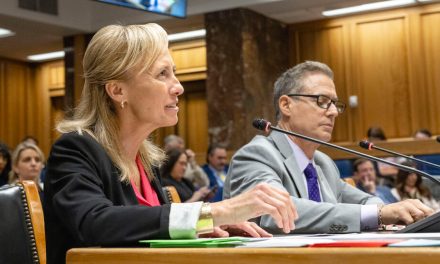
Dr. Houry provided more than 250 pages of emails to the Senate Health Committee in response to its written questions after she testified in September. She was involved in all the news. A former emergency physician who worked at the CDC under three presidents, she said in an interview that she wanted to “shed light” on public health decisions she considered dangerous.
The panel’s ranking member, Sen. Bernie Sanders, independent of Vermont, released the emails Tuesday evening along with a memo from his staff. A spokesman for the committee chairman, Sen. Bill Cassidy, Republican of Louisiana, did not respond to a request for comment about what the panel might do with them.
Officials at the Department of Health and Human Services did not respond to a detailed list of questions about the emails. But Mr. Kennedy has repeatedly said that he believes the CDC is corrupt and that as secretary he feels compelled to stir up trouble in both the agency and his department, including by firing people.
“I came to this job to change the culture of a broken agency that has engineered the worst decline in public health in American history,” he wrote on X in a recent post criticizing the Times’ coverage of his leadership of the Department of Health and Human Services.
When he testified on Capitol Hill after Dr. After firing Monarez as head of the agency, the secretary told senators that “effectiveness – not politics – will be the watchword of our leadership.” But the emails confirm Dr. Monarez’s own testimony before the Senate that President Trump’s political appointees were firmly in control.
“Susan,” Matthew Buckham, then Mr. Kennedy’s chief of staff, wrote on Aug. 19. “Let’s have a phone conversation this week to discuss in depth, but until we can connect face-to-face, I wanted to emphasize the absolute need for a political review of key policy decisions at the CDC.”
The goal, he wrote, is to ensure that “all political leaders have an eye on key decisions” and that personnel changes must bypass the White House.
“We’ll talk soon,” Mr. Buckham concluded, signing the message: “Make America Great! Matt.”
As the emails show, pressure from Mr. Kennedy’s aides in Washington, who took office before he was confirmed, began before his arrival. President Trump’s executive order to “end radical and wasteful federal DEI programs,” issued on his first day in office, prompted CDC officials to remove hundreds of agency websites, including data.cdc.gov — a massive repository of public health data — that might contain information about race or gender.
But on Friday, January 31, at 10:30 p.m. – the day after Mr. Kennedy completed his Senate confirmation hearings – Dr. Monarez an urgent plea.
“Sorry for the late request, but we need to get the ACIP website up and running,” she wrote, referring to the panel of vaccine advisors. She noted that some websites were no longer functioning “probably due to necessary language changes” and asked her subordinates to call her as soon as they received the message so they could discuss an “expedited process.”
No reason was given in the emails. But Dr. Houry and another former aide, who spoke on condition of anonymity to avoid backlash, said in interviews that Mr. Kennedy’s aides already working in Washington feared that removing vaccine-related pages could jeopardize Mr. Kennedy’s chances of confirmation.
The next morning at 8:30 a.m., CDC leaders held a telephone conversation with senior Health Department leaders, including Stefanie Spear, Mr. Kennedy’s closest adviser and later deputy chief of staff, to figure out what would stay and what would go. They developed a color-coded table: green for pages that were revisited; red for pages that had to stay down; Yellow for pages that “HHS” — an acronym for Mr. Kennedy’s office — wanted restored.
The advisory committee’s pages have been brought back online, except for information about vaccines to prevent Mpox, a sexually transmitted disease that primarily affects men who have sex with men. The Mpox website has since been restored, although the CDC has reverted to calling the disease “monkeypox,” a name the World Health Organization abandoned in 2022 after agreeing with public health experts who said it targeted racist and stigmatized patients.
The documents show that CDC political leaders went to great lengths to place Mr. Kennedy’s allies in key positions, even if they did not have the professional qualifications critical to the post. The agency tried to use Title 42, a federal code that allows the hiring of scientific experts without going through the regular civil service process, to hire a businessman with a long history of advocacy for parents of children with autism to run its National Center on Birth Defects and Developmental Disabilities.
Activist Mark Blaxill, a Harvard Business School graduate and founder of the group SafeMinds, has written books and medical journal articles about autism; one was withdrawn in 2023. CDC human resources officials concluded that he lacked the scientific qualifications to be considered a “respected advisor” under the law. He now works in a different role at the agency and does not direct the birth defects center.
The emails confirm, as The Times has previously reported, that Mr. Kennedy was instrumental in efforts to gain control of the Vaccine Safety Datalink (VSD), a database of millions of confidential medical records that he believes has the potential to prove a link between vaccinations and autism, a theory that has been debunked in numerous studies. His own top aides were also under pressure.
Mr. Kennedy “wishes to purchase all VSD data and place it in the Minister’s office,” Reyn Archer, his senior adviser, wrote to Dr. Houry and other officials. “This may be a leap, but there are other ways to do this, but today CDC is not willing to make giant leaps. I’m told we have to find a way to make giant leaps. I need your help with that.”
While the Secretary stayed away from most of the professional scientists, at least early in his term, he did give direct instructions to one of them, William Thompson. He has challenged a 2004 CDC study that concluded measles vaccination is not linked to autism and is working under the protection of government whistleblowers.
Dr. Thompson worked to compile data sources for future autism studies; he called it a “high priority for Secretary Kennedy.” A note from the secretary only appears once in the email collection. During a conversation with Dr. Thompson chimed in with a one-sentence message about a two-decade-old data set used by a former CDC researcher, Thomas Verstraeten.
“Bill. I assume this is the original stray data,” Mr. Kennedy wrote.
In interviews, former employees said they wrote their emails with history in mind; They wanted to document what happened. Overall, the notes are polite exchanges between colleagues trying to navigate difficult circumstances. But Dr. Houry sounded exasperated at times, such as when Mr. Burns asked for 10 years of measles data while CDC “disease detectives” were sent to Texas to combat the outbreak.
“Let me see how much work the team needs to do this,” Dr. replied. Houry and obviously wrote in a hurry. “Active control of measles must be a priority.”

