














The Knesset passes a law restoring the Chief Rabbinate’s monopoly on kosher certification
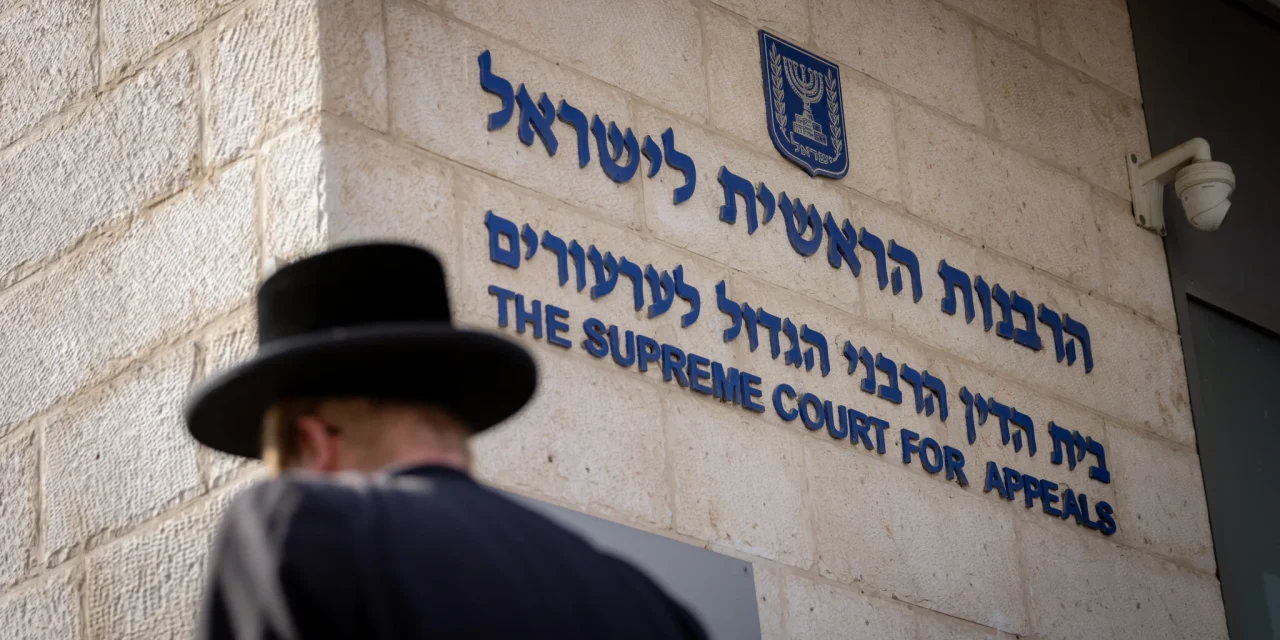
The Knesset voted 46-41 on Tuesday evening to give final approval to a law restoring the Chief Rabbinate’s exclusive control over kosher certification. It is one of a series of laws that the ultra-Orthodox parties have demanded to be passed in return for support for important coalition legislation.
The law, championed by the Shas party, will reverse reforms by the previous government that allowed private Orthodox organizations to issue kosher certificates in their own names provided they meet state standards.
Opponents of the bill argue that it will eliminate competition and ultimately increase costs and harm businesses and consumers.
The approval came just a week after the Chief Rabbinate apparently allowed the liberal rabbinical organization Tzohar to issue kosher certificates under Israeli law for the first time, following a Supreme Court ruling last month that ordered it to withdraw its refusal to recognize the group – a move that drew opposition from the current Ministry of Religious Services. But within hours the decision was challenged, with senior officials saying the permit had not been properly approved and therefore had no legal force.
The new bill passed Tuesday stipulates that only the Chief Rabbinate can issue kosher certification.
Get the daily edition of The Times of Israel
by email and never miss our top stories
By registering you agree to the terms and conditions
In Israel, the right to use the word “kosher” on food labels is strictly regulated. Only certification bodies recognized by the Rabbinate may recognize a product or facility as meeting religious requirements. Unlike other countries where kashrut is viewed as a purely religious matter, in Israel any business that claims to be “kosher” without obtaining certification from a recognized body is breaking the law.
The bill is part of the coalition’s agreement with the ultra-Orthodox parties to advance several haredi priorities, including a basic law that enshrines Torah study as a core state value and a measure that freezes the arrest of haredi conscientious objectors. Both measures came into force this week.
In return, Haredi parties would support key coalition legislation, including bills to establish a politically appointed inquiry into the failures surrounding the October 7, 2023 attacks; limiting the powers of the Attorney General; and overhauling the media.
Prime Minister Benjamin Netanyahu (foreground) walks past ultra-Orthodox lawmakers as the Knesset prepares to pass a law that will ban the arrest of conscientious objectors and effectively freeze the incorporation of ultra-Orthodox troops into the IDF for at least the next seven months, July 14, 2026. Netanyahu left the chamber before the actual vote. In the middle, with his hands around his mouth, stands UTJ MK Meir Porush. (Chaim Goldberg/Flash90)
Haredi parties say ‘rift’ with Netanyahu is over, next government must pass permanent exemptions
Following the passage of the law on Tuesday that temporarily bans the arrest and prosecution of Charedi conscientious objectors, ultra-Orthodox politicians in the Knesset told reporters that their “rift” with Prime Minister Benjamin Netanyahu is over.
However, a senior member of a haredi party told Channel 12 that after the October 27 election, if results go their way, haredi parties will demand a law permanently exempting all ultra-Orthodox men from military service, and that they will insist that this law be passed before officially joining another Netanyahu-led coalition. (Ultra-Orthodox young men do not perform military or military service, but this is not enshrined in law.)
“Netanyahu proved today that we are one [political] Block, but that is not enough,” the unnamed senior Haredi politician was quoted as saying. “After the elections, we will permanently demand an IDF bill.” [exempting Haredim from IDF service]before we form a government. We learned to work with him.”
Haredi men block Route 4 during a protest against the imprisonment of conscientious objectors near Bnei Brak, June 17, 2026 (Avshalom Sassoni/Flash90)
Citing unnamed military sources, Channel 12 complained that with today’s law, the IDF no longer has any influence over persuading Haredim to serve in the military, even though it urgently needs thousands more combat soldiers, and that it now also has to free several dozen Haredi conscientious objectors from military prisons.
Before the law was passed, IDF Chief of General Staff Lt. Gen. Eyal Zamir called the proposal “unimaginable,” saying it was “clearly and unequivocally at odds with the needs of the IDF” and amounted to “providing mass exemptions from law enforcement.”
It is currently estimated that around 72,000 ultra-Orthodox men between the ages of 18 and 24 are eligible for military service but have not enlisted. The IDF has repeatedly said in recent months that it urgently needs 12,000 new recruits as the multi-front conflict continues.
The law faced strong opposition from reservists, Knesset legal advisers and much of the public.
We cannot do this work alone.
The war with Iran was a burden for all of us in Israel. But when I heard about a high-casualty incident—ballistic missile strikes in Arad and Dimona that injured nearly 200 people—I drank a cup of coffee, packed a bag, and headed south.
There I spoke to Shilgit, the head of an after-school program for disadvantaged young people. Standing in front of her destroyed center, Shilgit said it was a miracle that no children had been hurt and spoke of how the community had come together in the hours since.
As a reporter for The Times of Israel, I am committed to telling stories of resilience like Shilgit’s. But my colleagues and I cannot do it alone. If you value such work, Please consider joining our reader support group, the Times of Israel Community. Your financial support is essential to sustaining truly human reporting like this.
— Stav Levaton, military reporter
Yes, I will join. Yes, I will join. Already a member? Log in to stop seeing this
You are a dedicated reader
That’s why we created The Times of Israel, to provide discerning readers like you with essential coverage of Israel and the Jewish world.
So now we have a request. Unlike other news outlets, we have not set up a paywall. But because the journalism we do is expensive, we invite readers who care about The Times of Israel to support our work by subscribing The Times of the Israel Community.
For just $6 a month you can support our quality journalism while enjoying The Times of Israel AD FREEas well as access exclusive content Available only to members of the Times of Israel community.
Thank you very much,
David Horovitz, founding editor of The Times of Israel
Join our community. Join our community. Are you already a member? Log in to stop seeing this