















Pregnancy with lupus is risky. Would she be able to deliver her baby?
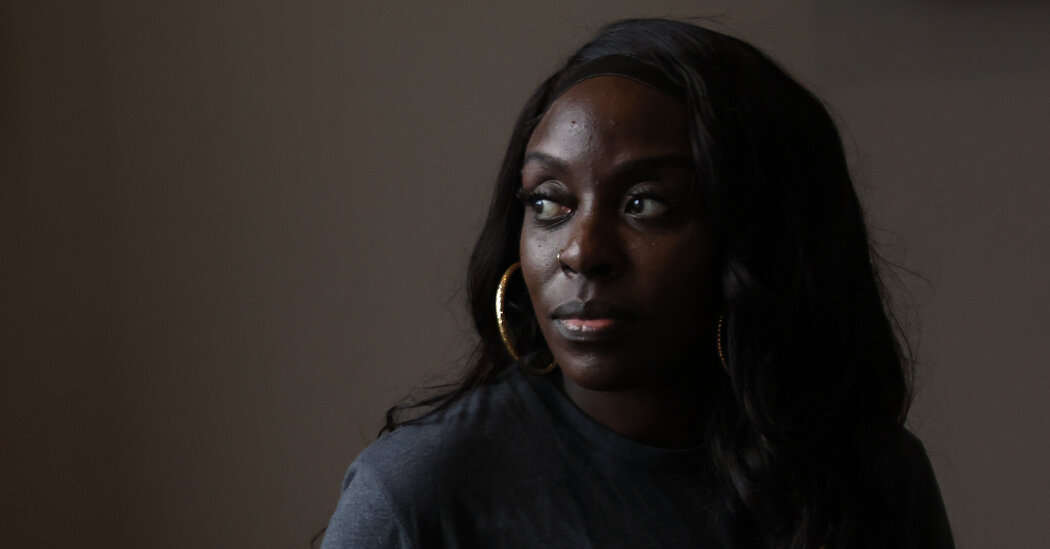
Fatimah Shepherd knew she shouldn’t get pregnant—not now, as her illness grew, and perhaps never.
Lupus, an autoimmune disease, was eating away at her kidneys, and doctors had warned her that pregnancy could lead to complete kidney failure.
But in December 2023 there it was, a positive pregnancy test: two bold lines on the test strip, bright pink and undeniable.
“I almost fainted,” said Ms. Shepherd, 41, a New York City Fire Department dispatcher who lives in Brooklyn and had always wanted to have a child. “All I thought was, ‘What should I do?'”
For much of the 20th century, doctors advised patients with lupus — a disease that strikes women in their prime of childbearing age and disproportionately affects black, Hispanic and Asian women — to avoid pregnancy at all costs. The miscarriage rate was high and pregnancy appeared to worsen the disease.
This advice has changed over the past few decades as treatments have improved. But pregnancy can still be a risky endeavor, and women with lupus, which attacks the kidneys, are recommended to become pregnant during times when their disease is stable and has been in remission for six months.
Ms. Shepherd’s illness was anything but stable. Her kidney function was so impaired that she was put on the waiting list for a donor kidney. A nervous Ms. Shepherd called her nephrologist, Dr. Mala Sachdeva, a professor of medicine at Northwell Health in Great Neck, NY
But Ms Shepherd recalled: “When I told her my news she said: ‘Wow! Congratulations!’ And the way she said it, I could finally breathe a sigh of relief.”
The doctor told her that pregnancy was a serious health risk, but that she had cared for other women who had done well and given birth to healthy babies. She told Ms Shepherd: “We will get through this.”
“Throughout my pregnancy, every time I saw her, she said, ‘We’re going to get through this,'” Ms. Shepherd recalls.
“A lot to think about”
The team of doctors leading Ms. Shepherd’s care at Northwell Health — all women, most of them mothers themselves — met with Ms. Shepherd early in her pregnancy. They described in detail the risks that pregnancy posed to both her and the fetus and urged her to think carefully about whether to continue.
The stress of pregnancy would almost certainly push her into kidney failure, and that could be permanent. Your high blood pressure could get out of control, which could affect the baby’s growth. She was also at high risk of developing preeclampsia, a life-threatening condition that could force her doctors to deliver the child prematurely.
“If her blood had clotting problems or she had a seizure, we would deliver her to save her life,” said Dr. Hima Tam Tam, director of obstetrics at North Shore University Hospital and Long Island Jewish Medical Center
A premature baby would also be associated with risks. “There is a risk of cerebral palsy; there is a risk of blindness; there is a risk of the baby having difficulty walking,” said Dr. Dawnette Lewis, the director of the Northwell Center for Maternal Health.
There was also a risk that the baby wouldn’t make it at all.
The doctors had several conversations with Ms. Shepherd because they wanted to give her time to process the information. “It’s a lot to think about,” said Dr. Tam Tam.
But they told her they would support any decision she made.
“And she definitely knew what she wanted,” said Dr. Tam Tam. “I knew that from the moment I saw her. I just wanted to make sure she knew how long this journey would take.”
A room with a view
In January, Ms. Shepherd went on a planned vacation to the Bahamas. But when she came for a checkup a month later, the doctors were alarmed. Her potassium levels had risen sharply, which could lead to cardiac arrest. Her blood acid levels were also high, which posed a risk to the fetus. She had to start dialysis immediately.
Most patients with kidney failure undergo dialysis three times a week. However, four-hour sessions six days a week are recommended for pregnant women to minimize fluid fluctuations that can affect blood flow to the fetus. Fetal heart rate is monitored before, during and after dialysis.
Dialysis is strenuous and Ms. Shepherd would commute from Brooklyn to Long Island for her care. All doctors agreed: the safest thing to do at this point was to send her to the hospital.
“Somehow we all felt like we just wanted to pack them up and take them home,” said Dr. Tam Tam.
But Mrs. Shepherd had just arrived for a doctor’s appointment; She didn’t even have a change of clothes. Still, she trusted the team. “It was her suggestion, but it was my decision,” she said. “And I said, OK, I’ll do it. If you say this is better for my child, I’ll stay here.”
She would remain at Katz Women’s Hospital at North Shore University Hospital in Manhasset for the next five months.
Ms. Shepherd was given a room with a view: on a corner, with large windows overlooking the parking lot on one side, where she could watch the comings and goings of hospital staff, and on the other, a small waterfall amid a grove of trees.
She decided to make the best of it. She did her hair every morning and got dressed—no hospital gowns for her—and began painting. She had dialysis in the afternoon and spent the mornings walking the hospital hallways to maintain good circulation in her legs. Darnell Wilson, the baby’s father, came every Friday and spent the weekend with her; Family members visited her, and her fellow firefighters set up a rotating visitation schedule so she was never alone.
When Ms Shepherd was six months pregnant, she hosted a gender reveal party in her hospital room. She had a boy and painted her nails blue to celebrate. In May, she hired a professional photographer to do a maternity photoshoot of her.
“I’ve been keeping myself busy,” she said. “I took lovely walks around the hospital and socialized with everyone. And I prayed every night and all day. I had to keep a positive attitude.”
Her doctors checked her labs daily, continually adjusted her medications, and monitored her for signs of preeclampsia. It was difficult because lupus flare-ups during pregnancy can look like the disease, and when blood pressure rises, it’s not always clear whether it’s hypertension or preeclampsia. “You don’t want to give birth to someone prematurely because of an incorrect diagnosis,” said Dr. Lewis.
“We were scared,” said Dr. Tam Tam and then corrected himself: “We were scared.”
Ms Shepherd’s official due date was August 3, but her medical team planned to induce her on July 8 if she made it by then. But at 3.30am on July 5, Ms Shepherd went into spontaneous labor and baby Oakari was delivered by caesarean section a few hours later.
Oakari was a healthy baby boy who weighed five pounds at birth. Mrs Shepherd carried him for almost 36 weeks. It was an incredible finding: Most women with lupus, whose disease inflames the kidneys, develop complications and have to give birth much earlier, about 33 weeks later.
“She really beat the odds,” said Dr. Lewis.
But she wasn’t quite out of the woods yet.
The fourth trimester
As soon as Ms Shepherd and her partner, Mr Wilson, got their hands on a car seat, they took Oakari home. Mr Wilson was on paternity leave for a few weeks and Ms Shepherd continued her dialysis treatments, now three times a week instead of six.
But in late August, Ms Shepherd began experiencing chest pains and shortness of breath. She went to the nearest emergency room where she was diagnosed with cardiomyopathy, a disease of the heart muscle that occurs in rare cases after birth, during the period known as the fourth trimester, which is at high risk for new mothers.
Ms Shepherd remained in hospital for a few days and was then referred to Dr. Evelina Grayver, director of women’s heart health at Katz Women’s Hospital. But when she arrived for her appointment on Long Island in early October with Oakari in tow, she was breathing rapidly and gasping for air.
“My nurse Paula ran into my office and said, ‘There’s a new patient and she doesn’t look well – she’s huffing and puffing,'” said Dr. Grayver.
Oakari had started crying, so Dr. Grayver picked him up and held him while she examined Ms Shepherd, who was having difficulty breathing, and gave her oxygen.
“She told me she thought she would just have to go on dialysis, but I told her, ‘I think you’re going to have heart failure,'” said Dr. Grayver.
Dr. Grayver called transport to take Ms Shepherd to the emergency room while Ms Shepherd tried to reach her partner. But Mr Wilson had a job several hours away and Ms Shepherd’s sister couldn’t get to hospital straight away.
“I was worried she would have to be put on a ventilator, but the only thing she was worried about was the baby,” said Dr. Grayver.
Dr. Grayver walked into the emergency room, still holding Oakari. He was fussy, so the emergency nurses warmed up a bottle for him, and Dr. Grayver sat in a corner and fed the infant.
“Fatimah was so distraught and she saw the baby come to me and said, ‘You’re so good with him,'” recalls Dr. Grayver. “So I said, ‘Do you want him to stay with me?'”
And that’s what they did. Ms. Shepherd was started on a nitroglycerin infusion, and while a bed was being prepared for her in the cardiac intensive care unit, Dr. Grayver was given permission to look after the baby until a family member could pick him up.
Dr. Grayver kept Oakari with her all afternoon and her nurse took him with her whenever a patient came. Dr. Grayver was preparing to take him home when Mrs Shepherd’s sister came to collect him. “Just between you and me, I was secretly pretty disappointed,” said Dr. Grayver. “He’s so cute.”
Ms. Shepherd was lucky. In about a third of patients with postpartum cardiomyopathy the disease worsens, in about a third it stays the same, and in about a third the disease improves. Mrs. Shepherd corrected herself. “I am overjoyed,” said Dr. Grayver.
Oakari is almost 2 now. He goes for walks – when he’s not running – and loves soccer, picture books and other children.
But Ms Shepherd’s kidney function did not recover after delivery. For a while she hoped that a living donor would come along and give her a kidney. Organs from living donors last longer and the wait for a kidney from a deceased donor can be up to five years.
But at 6:40 a.m. on April 19, Ms. Shepherd received a call from North Shore University Hospital: A kidney was available and it was a good match for her. Could she be at the hospital in an hour?
She did, and by afternoon she had a new, healthy kidney. It was the ultimate happy ending.
Now she looks forward to taking Oakari to swimming lessons and the many other things she couldn’t do while on dialysis. Above all, she said, “I want to regain my energy and play with my son like a normal mother.”
