






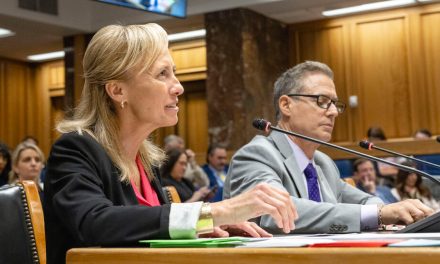










Kennedy launches a campaign to help Americans stop taking antidepressants

Health Secretary Robert F. Kennedy Jr. announced several initiatives Monday aimed at curbing the prescription of selective serotonin reuptake inhibitors, the most commonly prescribed class of antidepressants that he says is extremely difficult to stop.
Mr. Kennedy has long signaled that reducing the use of psychiatric drugs would be a goal of his term, but Monday’s announcements were the first significant step in that direction.
The initiative focuses on the most commonly prescribed class of psychiatric medications, first-line treatments for depression and anxiety, which include Zoloft, Lexapro, Paxil and Prozac. In 2026, 16.6 percent of U.S. adults, or about one in six, reported currently taking an SSRI
The drugs, introduced almost 40 years ago, became increasingly popular, partly because they had fewer side effects than previous antidepressants and could be prescribed by family doctors. Doctors typically told patients that stopping SSRIs was straightforward. However, many patients report withdrawal symptoms, including brain zaps, restlessness and flu-like symptoms, and say they received little support from doctors.
The changes — new training, reimbursement mechanisms and clinical guidelines — are prompting doctors to help patients stop medications and consider nonpharmaceutical interventions such as therapy, diet and exercise.
“Psychiatric medications have a role to play in care, but we will no longer view them as the standard, but as an option that can be used when needed, with full transparency and with a clear way out when they are no longer needed,” Kennedy said at a summit on mental health and overmedicalization organized by the MAHA Institute.
While some patients benefit from SSRIs, he said, others report emotional numbing, loss of motivation, suicidal thoughts and difficulty with withdrawal.
“Let me be clear: If you are taking psychiatric medications, we are not asking you to stop,” Kennedy said. “We ensure you – and your doctor – have the information and support to make the right decision for you.”
No major medical organizations were represented at the meeting, and some subsequently rejected claims that psychiatric medications were being overprescribed.
“We may have objections to this blanket ‘over-prescription’ hypothesis that underlies the secretary’s statements,” said Dr. Marketa Wills, executive director and medical director of the American Psychiatric Association. “There’s probably over-prescription and under-prescription in all areas of medicine, and it’s no different in mental health care. And there are people who still don’t have access to health care at all and need it.”
However, she added that she welcomed Mr Kennedy’s focus on mental health and that she hoped to be involved in developing clinical guidelines on deprescribing.
“We as APA want to be at the table for all of these discussions and policy improvements,” she said. “The bottom line is that we believe clinical care is safe and should be individualized for all patients, and we believe the secretary is taking steps that are beneficial to the area.”
Federal agencies have various levers to influence prescribing decisions through reimbursement rules and regulatory actions, and Mr. Kennedy plans to use several of them. The Centers for Medicare and Medicaid Services is implementing a mechanism that allows doctors to get paid for the time they spend helping a patient stop taking medications, he said.
Additionally, the Department of Health and Human Services will convene a technical expert panel to develop clinical guidelines for prescribing discontinuation, and this summer the Substance Abuse and Mental Health Services Administration (SAMHSA) will release training modules focusing on the risks of psychiatric medications and medication tapering and prescribing.
Mr. Kennedy also released a “Dear Colleague” letter instructing providers to “expand the use of nonpharmacologic treatments and strengthen informed consent and shared decision-making.” The letter recommends, among other things, psychotherapy, exercise, social contacts, physical activity, diet and nutrition.
“Our goal is clear: to reduce unnecessary reliance on medications, improve patient outcomes and give patients back control,” he said.
It is difficult to say what impact the initiatives will have on prescribing practices determined jointly by patients and their providers.
The United States could follow the lead of Britain, which commissioned a comprehensive report on overprescription and subsequently implemented a series of reforms, including updating clinical prescribing guidelines for the National Health Service and establishing a national audit program to monitor prescribers’ drug use.
Many people report withdrawal symptoms after reducing the dose or stopping an antidepressant. Symptoms can include “brain zaps,” which are shock-like sensations, flu-like symptoms, insomnia, nausea, and restlessness.
The prevalence and severity of these symptoms has been a matter of debate. In 2019, two British researchers published a study that found that 56 percent of patients experienced withdrawal symptoms when stopping antidepressants and that 46 percent of patients described their symptoms as severe.
Subsequent studies have found less widespread withdrawal symptoms. In 2024, after controlling for a placebo effect, a team of German researchers concluded that only about one in six people reported withdrawal symptoms and that a much smaller number, about 3 percent of patients, experienced severe withdrawal.
During his confirmation hearings last year, Mr. Kennedy claimed without evidence that SSRIs were partly responsible for the increase in school shootings and that they may be harder to quit than heroin. At Monday’s event, Mr. Kennedy reiterated that claim.
“I happen to be a real expert because I was a heroin addict for 14 years and never wanted to be,” he said. “I kept coming out of it and then back in. I probably went through withdrawals 100 times,” he added. “You just have to prepare for 72 bad hours.”
He compared the experience to the ordeal of an unnamed family member who he said was “literally suicidal every day” when she went off an SSRI after taking it for several years. “It’s heartbreaking to hear from a family member,” he said. “And I’ve heard that from hundreds, hundreds of people, the same story over and over again.”
At the one-day summit, speakers advocated various steps to address the over-prescription of psychotropic drugs, such as: Examples include opting out of school-based mental health assessments, requiring written consent before starting medication and placing clearly visible cigarette-style warnings on packaging.
Laura Delano, an author and former psychiatric patient who founded Inner Compass, a nonprofit group that supports people quitting medications, described how she spent her teenage years “on two medications, then three, then four, then five,” leaving her in despair and numbed feelings.
Under Mr. Kennedy’s leadership, she said, she has seen the peer-led, grassroots effort to help patients get off medications grow into a powerful force, with supporters within the government.
“We are now becoming aware of the false promises of this industry called mental health,” Ms. Delano said. “The time for this deceptive mythology has run out. Our culture is now seeing through it. A few years ago, never in my wildest dreams could I have imagined that we would reach this tipping point.”