

















How to turn your phone into a personal health dashboard
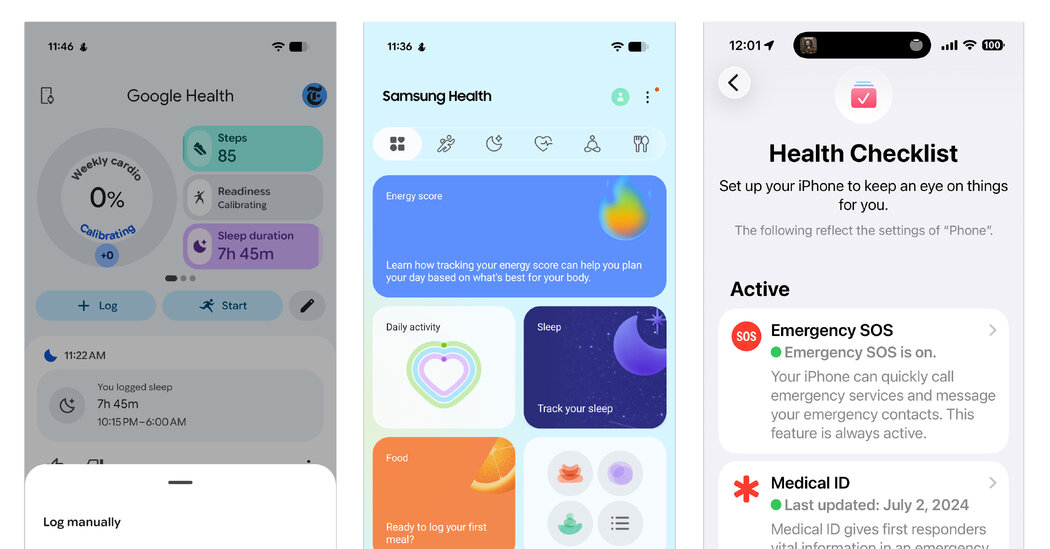
The Health app on your phone’s home screen is versatile, even if you don’t have a smartwatch or fitness tracker. With a little manual effort, you can use the app to get a better idea of your overall well-being.
There you can, for example, keep a nutrition and fitness diary. Most phones offer a free basic step counting feature. And you can link other workout and diet apps you use to optimize your data.
Here’s how to get started.
Choose your app
The menus in health apps can be a bit overwhelming, so take your time to explore. Each app offers the ability to manually log your daily workouts, food intake, emotional state and sleep time.
You can set up medication reminders. And if you use a compatible separate exercise or diet app, you can often link it to the Health app so you don’t have to log updates twice.
Many phones already have the automatic step counting function activated. While not as precise as some dedicated sensors, the step count shown on the main screens of Google Health, Samsung Health and Apple’s Health can give you a general idea of your daily distance. (If your phone isn’t counting your steps, check your settings to make sure the fitness tracking feature is turned on.)
Synchronize health records
Many health care providers use “patient portal” sites like MyChart that allow you to log in and see your test results and other electronic medical records. If the provider’s website is compatible with your health app, you can sync these records to have them all in one place. You will need the login information you use for the provider’s online patient portal.
If you have confidentiality concerns about pulling in digital records to a different app, check your health app’s privacy policy before you proceed. Google Health, Samsung Health and Apple’s Health all have statements on their websites. Note that federal privacy laws generally do not apply to mobile devices.
There is a page with detailed instructions on the Google Health support page. To sync your records directly from your health care provider, open the Google Health app, tap the Connections icon in the upper-left corner of the screen and tap Medical Records; iOS users must first tap on “Apps and Services” to get to the “Medical Records” option. On the Medical Records screen, select Manage Connections and then select the Add More Providers button to browse and sync your files.
In Samsung Health, open the app, tap the Home tab at the bottom of the screen, scroll down and tap Health Records to get started.
In Apple’s Health app, tap your profile icon in the top right of the summary screen. On the next screen, tap Health Records and follow the onscreen prompts so you can view your files, test results and other data from your doctor, or share information.
Create a medical ID card
Even if you don’t plan to use it as a personal-health database, your phone can show important information to emergency medical workers on your phone’s lockscreen, should you be incapacitated. This information may include blood type, any current prescriptions or your health and organ donor status.
On many Android models, open (or download and open) the Personal Safety app and tap the “Your Information” tab at the bottom of the screen. There you can add your medical information and an emergency contact.
On an iPhone, open the Health app. If you’re not asked to set up your medical ID, tap your profile photo in the top right corner and select “Medical ID.” On the next screen, add or edit the details you want to share and give permission for the information to be displayed when your phone is locked.