

















How Lego MRI scanner sets reduce anxiety in children
People leave a Lego store in Manhattan in New York City on August 29, 2024.
Spencer Platt | Getty Images
In July 2023, just two months after his mother fought and won her battle against breast cancer, Sam Lane began to fall ill.
Sam underwent several rounds of tests and the now 14-year-old finally received a diagnosis: a rare brain and spine cancer.
“They said ‘cancer,’ and before I started crying I said, ‘Damn, I would have guessed that, but I didn’t want it to get that bad,'” Sam said.
But at his lowest point, on a feeding tube and unable to walk, a nurse offered Sam a ray of hope: She said she needed his help building a Lego MRI scanner set for fellow patients at Boston Children’s Hospital to play with and learn from.
Sam’s mother said she was “blown away” by the level of detail on the playset, which was made from special Lego bricks.
“I remember sitting there and saying to him, ‘Sammy, why don’t you take a break? You’ve been working on this for a while,'” Christina Lane said. “And he just didn’t even look at me and said, ‘No, this is important… I have to help other kids.'”
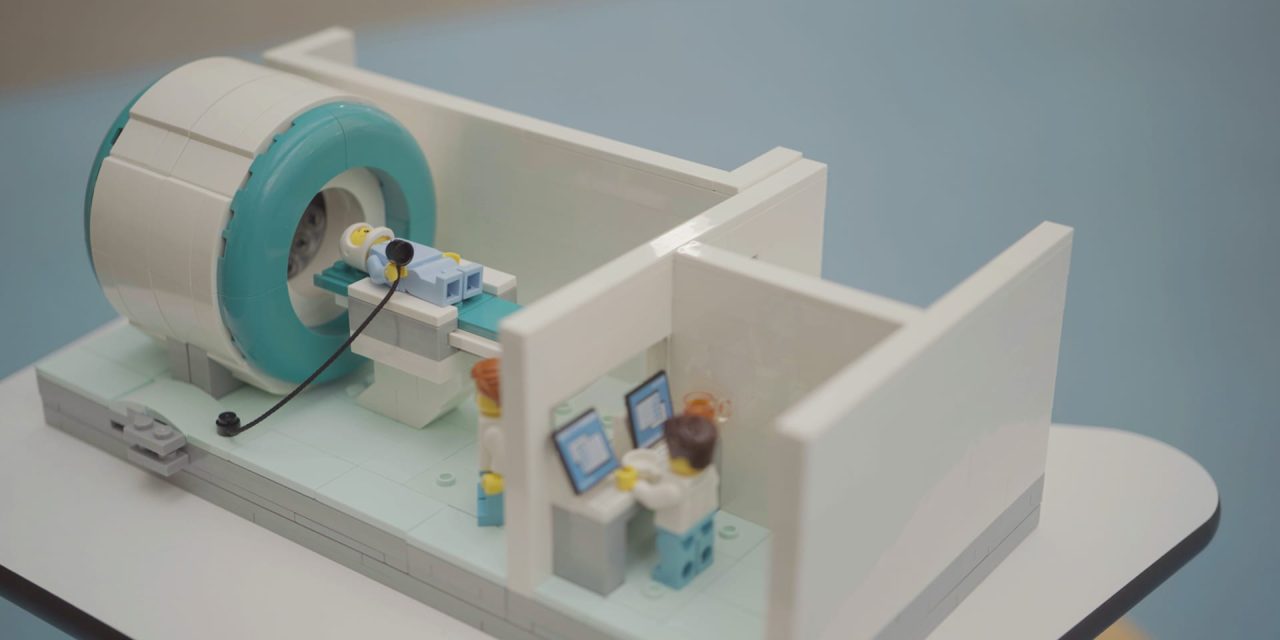
Lego’s MRI scanner sets, which include a scanner, patient bed, waiting room, staff figures and medical instruments, are specifically designed to help children learn the procedure through play. The table of the miniature MRI machine moves back and forth, mimicking a real procedure.
On Monday, the toy company announced that more than one million children worldwide have used the sets to prepare for their medical procedures. A new Lego study found that 96% of healthcare professionals said the model helped reduce children’s anxiety and 46% said the need for sedation was reduced after children played with the set.
Lego MRI scanner playset
Courtesy: Lego
MRIs, which do not require radiation, are commonly used in pediatric care — but because of the bright lights, loud noises and need to remain still, the machines often frighten children and require sedation, according to Sam’s child life specialists Laura Boegler and Alyssa Sachs.
They focus on ways to support the psychosocial and emotional well-being of patients and families at Boston Children’s Hospital and said opportunities for play are critical.
“We often say that play is a universal language, and so the playful approach of being able to touch and ask questions really helps alleviate fears and misunderstandings that every child has,” Sachs said.
Boegler said having children play with the Lego set before their own MRI scans helped significantly reduce anxiety and increase familiarity with the procedure.
The set Sam built is designed to ease the worries of other patients in a way that feels authentic to them.
“An MRI machine, kids don’t see it in school, they don’t talk about it at home, so it’s kind of this new scary thing,” Boegler said. “With the MRI Lego set we are able to show children in a way that is comfortable for them.”
Lego is not selling the sets and has instead donated more than 10,000 of the kits to hospitals around the world.
In recent years, Lego has worked to expand its customer base and deepen its strategy to achieve a positive annual growth rate. The company has begun targeting both adults and children with more sophisticated and customized sets, including a wide range of sets inspired by pop culture, from “Harry Potter” to “Wicked.”
In particular, the company’s plant and F1 racing sets have attracted new customers.
Icons Tiny Plants from Lego.
James Manning – Pa Pictures | Pa Pictures | Getty Images
Christina Lane said the MRI playset her son built helped him feel connected to other children with cancer.
“It’s really incredible to have a little Lego buddy that they can relate to and that’s going through the same things that they’re going through,” she said. “As a mother, as a nurse, as a human being, it is really important to be able to support our children in a playful way during such a challenging and difficult time.”
And the set has even helped Sam on his own journey. Now that he’s been cancer-free for over a year, he reflected on how his relationship with the machines has changed.
During his first MRI, Sam said he felt claustrophobic and scared and the noises were too loud for him to understand.
But now he has a simple and reliable strategy for all of his MRI sessions: “I fall asleep.”
Correction: This story has been updated to correct details about Sam Lane’s cancer diagnosis and treatment.