















“A jungle”: Reservists speak of permissive fire rules along the Yellow Line in the Gaza Strip
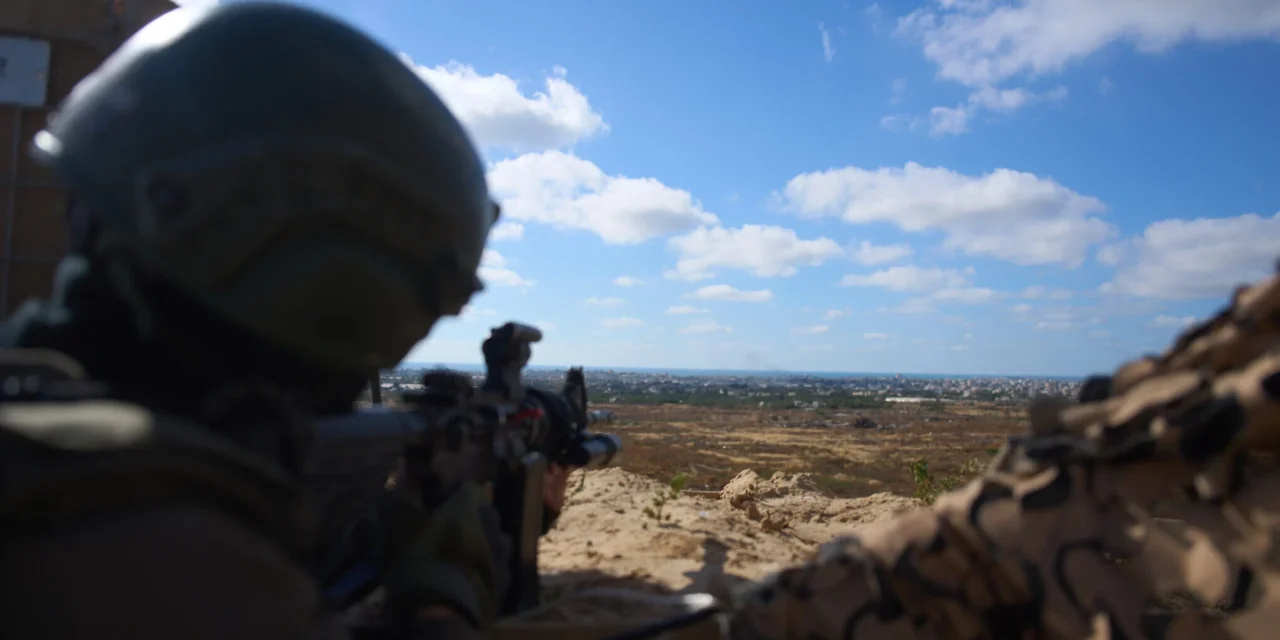
The Israeli combat soldier saw his comrades cheering and congratulating each other. They had just struck a Palestinian vehicle driving near the Israeli-controlled part of the Gaza Strip, killing everyone in it.
The reservist said scenes like this had become commonplace after a fragile ceasefire came into force in October. In the weeks he was stationed in the Gaza Strip, he said, he saw soldiers relishing the chance to pursue those who crossed – or nearly crossed – the Yellow Line, which divides the Gaza Strip into Israeli-controlled land and Palestinian areas under de facto Hamas control.
“It was a jungle,” the soldier, aged about 20, told The Associated Press. “After the ceasefire it was said: If someone crosses the border, they will be shot.”
As diplomatic efforts to strengthen the agreement have stalled, three soldiers described to the AP a sense of confusion in the contested area and a lack of clarity about the rules of engagement around the Yellow Line. Some commanders paid lip service to the deal, the soldiers said, while privately expressing a desire to continue the war in Gaza. Sometimes troops were too far away or reacted too quickly to see who they were shooting, one soldier said – a concern reflected in comments from a veterans whistleblower group.
The soldiers’ reports provide a rare glimpse into what has happened in the Israeli-controlled part of the Gaza Strip since the deal came into force seven months ago. The soldiers – reservists who were deployed across the Gaza Strip between October and January and have since returned – spoke on condition of anonymity because they feared they would be ostracized for their comments. They said they spoke out because they were upset and saddened by what they saw.
Get the daily edition of The Times of Israel
by email and never miss our top stories
By registering you agree to the terms and conditions
AP has reported shots fired at Palestinian civilians, including children playing, near the Yellow Line. And soldiers said it felt like the killings never stopped, despite the delicate deal.
A yellow block is seen in the central Gaza Strip on May 26, 2026, marking part of the Yellow Line that has separated the Israeli-controlled and Palestinian zones in the Gaza Strip since the ceasefire in October. (AP Photo/Ariel Schalit)
“Calling it a ceasefire is a joke,” one soldier told the AP.
An ambiguous line
When the ceasefire took effect, Israel withdrew its troops to a yellow line buffer zone, gaining control of just over half of the strip. Under U.S. President Donald Trump’s 20-point peace plan, Israeli forces are to carry out a broader withdrawal once a planned international stabilization force is deployed to assume responsibility for the enclave’s security, except for a security perimeter that will remain in place until Gaza is completely secure.
Diplomats monitoring the ceasefire say progress has stalled on the central sticking point of Hamas’s disarmament, on which all other issues – including Israeli withdrawal and reconstruction – depend.
Israel has since expanded control over additional areas in the Gaza Strip. Each side accused the other of violating the ceasefire.
The exact location of the line was unclear and sometimes invisible. In some places it is marked with yellow blocks and barrels; in other cases it was sometimes not mentioned at all.
The military this week invited AP to tour a section of the Yellow Line in central Gaza near the Maghazi refugee camp. The line there was visible, demarcated by a wide dirt road and small yellow markings. To the east was a deserted stretch of open ground leading to a heavily fortified military post about 500 meters away.
An IDF commander said Hamas was active on the other side of the line and often sent people – terrorists and civilians – toward and even across the line to test the army’s readiness and response.
“There is no reason for anyone to approach the line,” he said, speaking on condition of anonymity under military rules. “There’s nothing here.”
The army said the entire line, which stretches the entire length of the Gaza Strip, is now clearly marked.
Mourners pray at the body of Palestinian Jamal Abu Aoun, who was killed in an Israeli airstrike, during his funeral at al-Aqsa hospital in Deir al-Balah, central Gaza Strip, May 30, 2026. (AP Photo/Abdel Kareem Hana)
More than 900 people have been killed in Gaza since the ceasefire took effect – dozens of them near or above the Yellow Line, according to the Gaza Health Ministry. The ministry does not say how many combatants and civilians there are and the numbers have not been verified.
The Israeli military has said most of the people killed crossing the border posed a threat to troops. But soldiers who spoke to the AP and Breaking the Silence – the whistleblower group that collected testimonies from troops during the war – say soldiers were at times too far away, acting too quickly and under too much pressure to say anything.
The Army told the AP that the area next to the Yellow Line was a “sensitive operational environment” and that there were signs warning that approaching it was prohibited. It said the army does not only target civilians as they approach the line, and its rules of engagement require the use of warnings before the use of force. In situations where there is an immediate threat, the emergency services are authorized to intervene, it said.
One soldier said troops had to act quickly, with information sometimes based on a hunch. It was the combat soldier’s second deployment to Gaza when the ceasefire began. He said he was stationed several hundred meters from the Yellow Line and saw several people who tried to cross it killed by soldiers.
Soldiers who shoot or order drone strikes don’t always know who is crossing the border, he said. Although soldiers must provide coordinates and get approval from their superiors before an attack, it is difficult to give accurate information because people are moving, he said. He described soldiers calling out coordinates based on a hunch or the last place they had seen someone.
According to Breaking the Silence, the general rules of engagement are extremely permissive, particularly for those who cross the line, and in many areas it is “shoot to kill.” Executive Director Nadav Weiman, a veteran who served in Gaza but not in this war, said the distance from the target and some trigger-happy soldiers could be problematic.
IDF soldiers occupy a military position overlooking the Yellow Line in the central Gaza Strip, May 26, 2026. (AP Photo/Ariel Schalit)
He said orders and policies from the military’s top commanders “have created a reality in which countless civilians have been and continue to be killed for crossing invisible boundaries.”
In a report by Breaking the Silence, in interview notes seen by AP, a soldier describes instructions to troops regarding anyone who crosses the Yellow Line: “Eliminate them no matter what.”
Soldier says human life is not valued
Another soldier who was stationed in Gaza for weeks after the ceasefire said commanders’ orders were to hold the line at all costs.
“There was a general feeling that human life had no value,” he said.
When it came to demarcating the Yellow Line, the soldier said his superiors told him it was “too much work” and not their job and that Palestinians should know where it was.
Staying in Gaza took an emotional toll, he said.
Snipers sometimes fired warning shots at people near the line, he said, but commanders urged troops to do more to protect themselves. The soldier understood that this meant firing more deadly shots.
Israel’s attacks are becoming ‘increasingly proactive’
An internal report circulated among aid groups last month and seen by AP said Israel had become “increasingly proactive” in its attacks across the Gaza Strip.
Palestinians walk along a street surrounded by buildings destroyed by Israeli military attacks during the Israel-Hamas war in Khan Younis in the southern Gaza Strip, May 29, 2026. (AP Photo/Abdel Kareem Hana)
Separate data from the Armed Conflict Location and Event Data Project, a U.S.-based nonprofit, said April was the deadliest month in Gaza this year and that deaths near the Yellow Line or people crossing it increased by more than 25 percent from January to April, from 58 to 73.
This week, Prime Minister Benjamin Netanyahu said Israel controls 60% of the Gaza Strip and the next step is to increase control to 70%.
The soldiers told AP that a ceasefire was difficult to achieve on the ground.
“We have to stop using that term,” one said about the word ceasefire. “It’s not about serving people who want to stop the war.”

