

















Congress’ hemp ban raises fears of mass layoffs and black market growth
The hemp industry is bracing for layoffs, production cuts and billions of dollars in lost revenue after Congress passed a government funding bill late Wednesday that includes a surprise provision that will ban nearly all consumer products derived from hemp.
Hemp, a derivative of the cannabis plant, was legalized for industrial uses such as rope, textiles and seeds in the 2018 Farm Bill. But the law’s broad definition created a loophole in federal regulations on THC — the psychoactive compound responsible for a high — experts say, allowing producers to extract psychoactive cannabinoids from federally legal hemp. Companies took advantage of this opening to flood the market with gummies, drinks and e-cigarettes that can produce a marijuana-like high.
The new ban, enshrined in a law that ends the longest shutdown in history, bans products that contain more than 0.4 milligrams of total THC per container. Industry executives said the threshold will wipe out 95% of the $28 billion retail hemp market when it takes effect in a year.
For reference, according to the Journal of Cannabis Research, a single hemp gum typically contains 2.5 to 10 milligrams of THC.
“This time we lost the battle,” said Jonathan Miller, general counsel of the US Hemp Roundtable. “In fact, this is a total ban on hemp products in the United States.”
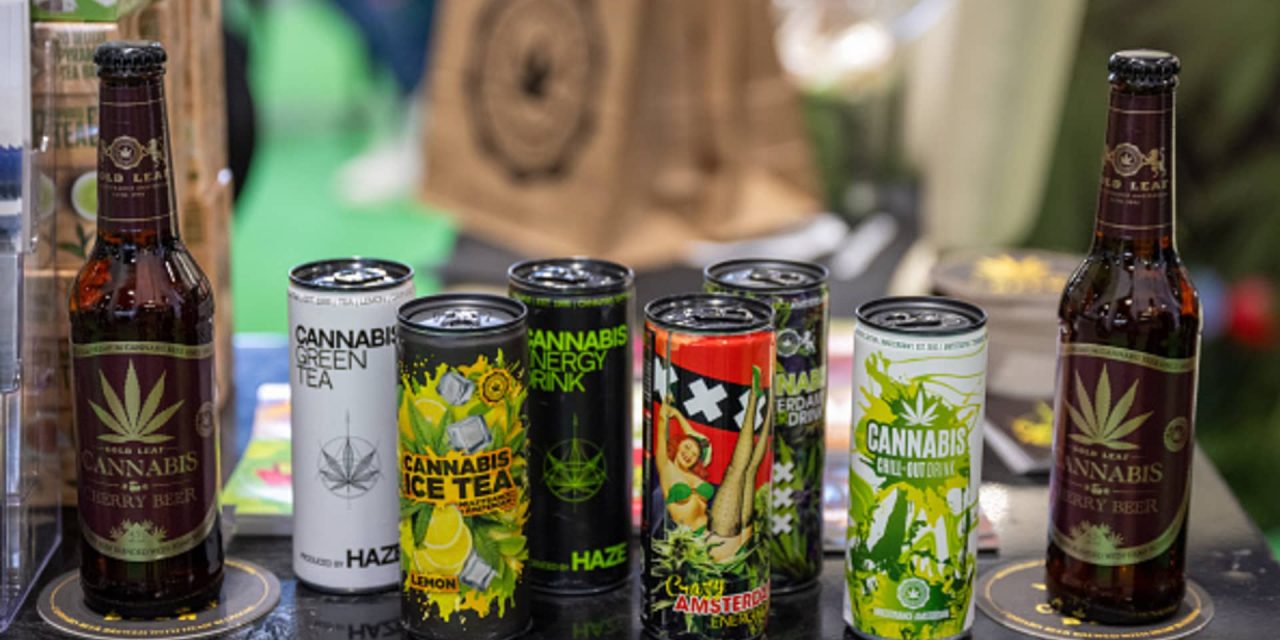
Cannabis beer and other cannabis-infused beverages will be available at a booth at the Mary Jane Hemp Fair.
Monika Skolimowska | Picture Alliance | Getty Images
The new cap replaces the 2018 Farm Bill’s definition of hemp, which was based on THC concentration and allowed products with less than 0.3% THC by weight rather than the total amount.
“We have a year to figure this out, but if we don’t, there could be losses across the industry in the meantime,” Miller said.
According to Whitney Economics, a hemp and cannabis research firm, more than 300,000 jobs related to the hemp economy are at risk, from farmers and extractors to manufacturers, logistics companies and retailers.
The ripple effects could affect land use, contracted acreage and equipment financing, as farmers who expanded their hemp cultivation after 2018 suddenly face canceled or restructured contracts, said Michael Gorenstein, CEO of marijuana producer Cronos Group. States with the largest hemp infrastructure, such as Kentucky, Texas and Utah, will likely face the greatest economic fallout, hemp managers said.
“Many small retailers, small businesses and farmers rely on hemp sales to survive,” Gorenstein told CNBC. “It will create a lot of pressure if they start losing businesses, jobs and crops.”
The move represents a dramatic about-face from 2018, when Sen. Mitch McConnell, R-Ky., pushed to legalize hemp to create a new national agricultural product and a new economic engine for Kentucky.
But after that law was passed, the lack of federal regulations allowed the emergence of a patchwork market with widespread safety problems, ranging from mislabeled and untested products to items whose potency rivaled recreational marijuana, according to government officials and industry experts.
McConnell and other Republicans argued that the new restriction “restores the original intent” of the Farm Bill. McConnell said closing the gap is key to protecting his agricultural policy legacy before his retirement next year.
“That was his [McConnell’s] “The signature law, the hemp law, and he wanted to fix it,” said Boris Jordan, CEO of the cannabis company Kurblattsaid CNBC. “Usually the last measure the Senate supports is an outgoing senator, especially someone as senior as him. This was a last-minute request from him.”
But not all Republicans agree. Kentucky Sen. Rand Paul has argued with his colleagues over hemp for months, calling the provision an overreach that “destroys jobs and destroys farmers,” adding that “every hemp seed in the country must be destroyed.”
“This is the most thoughtless and ignorant proposal to an industry that I have seen in a long time,” Paul said after the ban was passed.
In this July 5, 2018 photo, Senate Majority Leader Mitch McConnell inspects a piece of hemp removed from a hemp bale at a processing plant in Louisville, Kentucky. McConnell led the push in Congress to legalize hemp.
AP Photo | Bruce Schreiner
While executives like Jordan have said the legal market will shrink sharply with a ban, they warn that consumer demand for hemp-derived THC will not. Studies have shown that demand for marijuana and other THC-based products has continued to rise in recent years as some consumers cut back on alcohol and drink less overall.
Cannabis executives warned that the increasing popularity could lead to billions of dollars in sales on the black market, where the products are subject to no testing, no age restrictions and no tax compliance.
“This ban will now push all these small players into the illegal market,” Jordan said. “Companies have invested way too much money into this thing and the demand is still there and growing. They [companies] “They will not simply disappear, they will simply enter the illegal market and endanger more people.”
And because the products are transported underground, law enforcement agencies may have difficulty tracing the supply chains, Gorenstein said.
“Bad actors thrive when things disappear from the formal economy,” Gorenstein said.
State and local governments could also lose millions of dollars in tax revenue related to hemp sales, Gorenstein and Miller said. Several states use these funds to support addiction services, county budgets and public health programs.
Going forward, industry leaders argue that the only permanent solution is federal standards, not bans. Many favor a model that splits responsibility between agencies: the Food and Drug Administration for product safety oversight and the Alcohol and Tobacco Tax and Trade Bureau for taxation and distribution.
Executives have also compared the current environment to the early e-cigarette boom, when products like Juul offered fruity and candy-like cartridges that spread quickly under uneven oversight before the FDA intervened.
“Too many people have taken liberties that put the end user at risk,” George Archos, CEO of cannabis company Verano Holdings, told CNBC. “We like the strict regulation. We want consumer safety to be taken into account in every product manufactured and we hope this is achieved.”
Meanwhile, the industry is preparing to lobby the full court aimed at replacing the ban with federal testing, labeling and age restriction requirements.
“We already have members of Congress introducing regulatory legislation. We are pledging our support and working at the grassroots level to raise citizen awareness on the issue,” Miller said. “We are activating across the industry.”
At the same time, the Trump administration is “considering” reclassifying marijuana from a Schedule I drug – alongside heroin and LSD – to a Schedule III drug. The move would not legalize recreational marijuana but would make it easier to sell, advocates said.
“Big changes are expected across the board next year, but what they will be could determine the future of investment and the industry,” Gorenstein said.


