

















Military bases are full of “forever chemicals”. New Mexico wants them cleaned up.
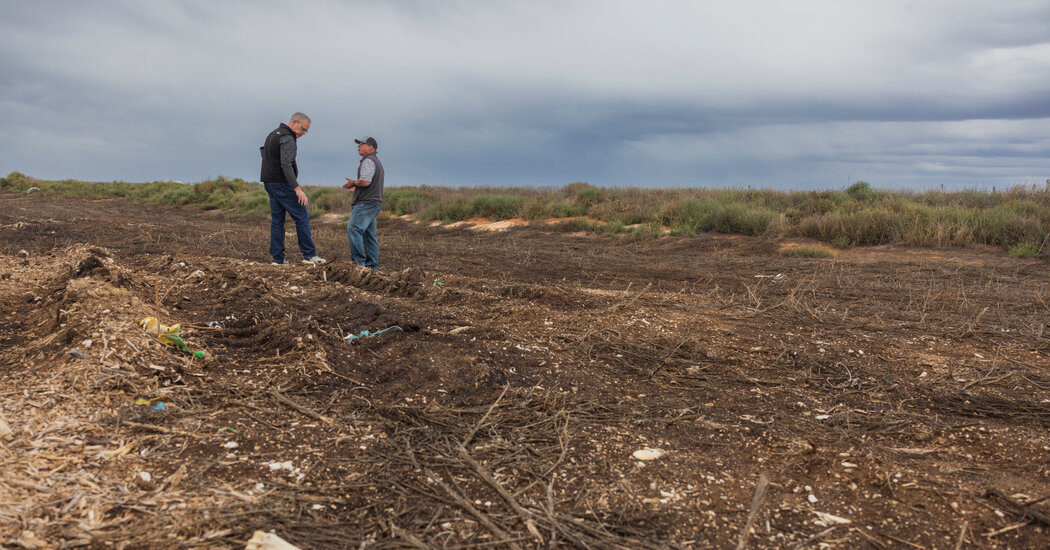
Two men walked through cattle pens with .22 caliber rifles and killed Art Schaap’s cows. A man raised his rifle, its barrel inches from a cow’s forehead. A shot would be fired, the cow would fall, and the men would move on to the next cow.
There were 3,665 cows at the Highland Dairy in Clovis, New Mexico, a lowland town near the Texas border. After six hours there were no more shots.
Mr. Schaap felt he had no choice but to have his herd killed. Tests found that the water he took from wells on his property contained exceptionally high levels of PFAS, also known as forever chemicals, which are linked to birth defects, liver and heart disease, and some cancers. State and federal regulators revoked his license to sell milk and quarantined his herd. Selling his cows for beef was out of the question.
“I don’t want this farm anymore,” said Mr. Schaap.
The source of the contamination was its neighbor, Cannon Air Force Base, home of the 27th Special Operations Wing, according to state environmental regulators. Firefighters there carried out exercises with foam containing PFAS for years. Runoff had seeped into the aquifer where Mr. Schaap and other farmers and ranchers drew their water.
Similar scenarios have played out at hundreds of military installations across the United States. But New Mexico has become the center of the national debate over PFAS. The state is suing the federal government for turning bases like Cannon into epicenters of persistent chemical contamination.
Gov. Michelle Lujan Grisham led this campaign. Weeks after she became governor in 2019, her administration filed a lawsuit against the U.S. Air Force over PFAS pollution at Cannon. Because the allegations in New Mexico are so clear, a federal judge in South Carolina chose New Mexico’s lawsuit as a model for similar litigation across the country.
The designation means the outcome of the New Mexico case will be an important benchmark in how the more than 15,000 similar PFAS lawsuits across the country are handled in court, lawsuits filed on behalf of people like Mr. Schaap who claim damages from perennial chemicals in firefighting foam.