
















CVS Health (CVS) Q1 2026 Earnings
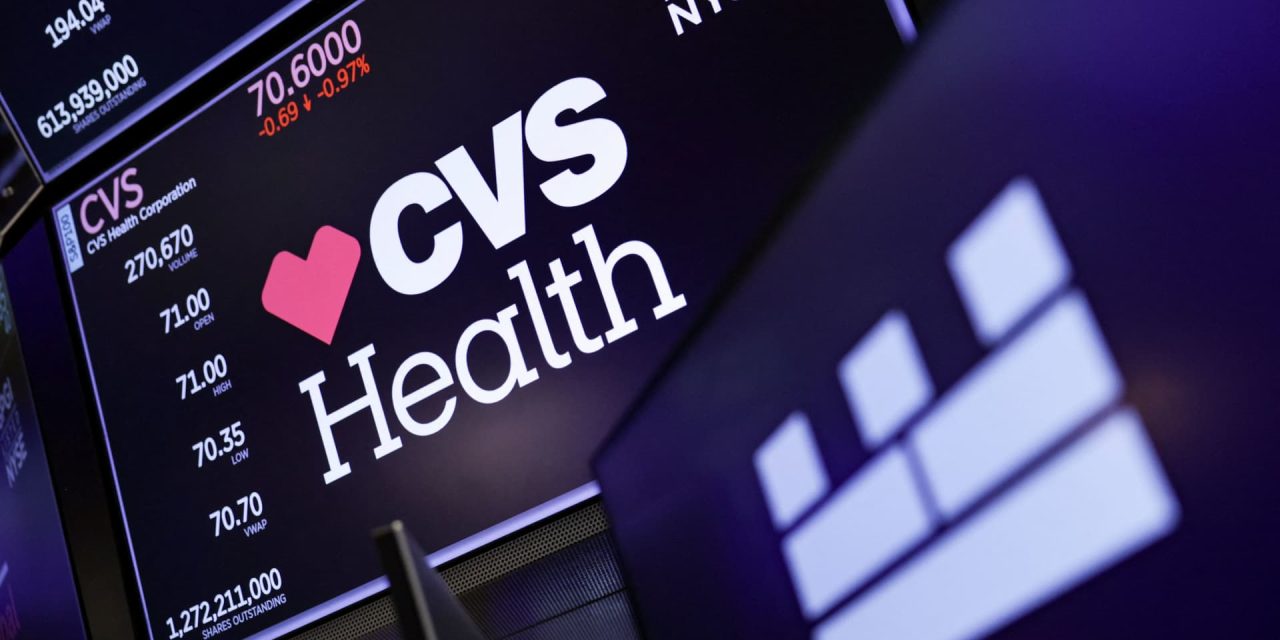
A screen displays the logo and trading information for CVS at the New York Stock Exchange, March 24, 2026.
Jeenah Moon | Reuters
CVS Health On Wednesday, it beat first-quarter profit and revenue estimates and raised its 2026 forecast as its once-troubled insurance business improved.
CVS, which operates the country’s largest pharmacy chain, expects full-year profit between $7.30 and $7.50 per share. That’s an increase from the previous forecast of $7 to $7.20 per share.
The company also expects revenue of at least $405 billion in 2026, up from its previous forecast of at least $400 billion.
The majority of that $5 billion increase was “due to the tailwinds we see for insurer Aetna,” CVS CFO Brian Newman said in an interview with CNBC.
All of the healthcare giant’s businesses – insurance, its retail pharmacy and health services – beat Wall Street’s sales expectations. But Aetna’s results will likely be of utmost importance to investors as they watch high medical costs weigh on major health insurers over the past two years.
The results indicate further progress in CVS’s broader turnaround plan, which included $2 billion in cost cuts, the closure of underperforming stores, a leadership change and cost reductions within privately held Medicare Advantage plans.
“From an investor perspective, we said, let’s set realistic, reasonable targets and then find ways to outperform. And we did that at the end of last year and throughout the quarter,” Newman said. “So when we hit and raise, which I think is probably the fourth or fifth time in a row, it feels like we can do it.”
“We are so confident about the year, but we are still cautious or prudent,” he added, noting that medical costs are still too high.
Shares of CVS rose more than 7% on Wednesday.
Here’s what CVS reported for the first quarter compared to Wall Street’s expectations, based on an analyst survey from LSEG:
- Earnings per share: $2.57 adjusted vs. $2.20 expected
- Revenue: $100.43 billion versus expected $95.09 billion
The company reported first-quarter net income of $2.94 billion, or $2.30 per share. In comparison, net income for the same period last year was $1.78 billion, or $1.41 per share.
Excluding certain items such as restructuring costs and capital losses, adjusted earnings for the quarter were $2.57 per share.
CVS reported first-quarter revenue of $100.43 billion, up 6.2% from the same period last year, as all three divisions posted growth.
The CVS report also contributes to an overall solid first quarter for the entire health insurance sector, although the second quarter will prove even more important for these companies as they gain clearer information about medical costs.
The insurance unit shows improvements
The insurance business generated revenue of $35.97 billion in the quarter, up about 3% from the first quarter of 2025. That was above the $33.28 billion analysts had expected, according to StreetAccount.
Newman attributed the quarter’s performance to Aetna’s underlying strength, citing organizational changes to processes or technologies that allowed the company to “get things done more efficiently.”
Aetna and other insurers have struggled with higher-than-expected medical costs over the past year as more Medicare Advantage patients return to hospitals for procedures they had delayed during the pandemic. Medical costs remain high, but Aetna and other insurers appear better equipped to handle the trend as many cut membership and patient benefits and exit unprofitable markets.
The insurance segment’s medical benefit ratio – a measure of total medical costs paid relative to premiums collected – fell from 87.3% to 84.6% compared to the previous year. A lower ratio typically indicates that a company has collected more in premiums than it has paid out in benefits, leading to higher profitability.
According to StreetAccount, analysts expected a rate of 86.3%.
Newman said medical costs won’t improve, but CVS has internal programs in place to “reduce the cost of how we operate.” He noted that the company is better at predicting medical cost trends and said he’s glad “we’re not seeing a lot of surprises.”
But Newman said CVS now needs to focus on using the same tools to reduce medical costs.
In a press release, CVS also explained that the unit’s year-over-year improvement was due to the absence of a so-called premium deficiency reserve recorded during the same period in 2025. This is a liability that an insurer may need to cover if future premiums are insufficient to cover expected claims and expenses.
CVS’ pharmacy and consumer wellness division posted first-quarter sales of $31.99 billion, relatively flat compared to the same period last year. Analysts were expecting revenue of $31.70 billion, according to StreetAccount estimates.
This unit dispenses prescriptions at CVS’s more than 9,000 retail pharmacies and provides other services such as vaccinations and diagnostic testing.
The company’s healthcare services segment generated revenue of $48.24 billion in the quarter, up 11% from the same period last year.
This unit includes pharmacy benefit manager Caremark, which negotiates drug discounts with manufacturers on behalf of insurance plans, creates lists of drugs or prescription lists covered by insurance, and reimburses pharmacies for the cost of prescriptions.
Choose CNBC as your preferred source on Google and never miss a moment from the most trusted name in business news.