









An insider guide to 6 of the most beautiful public swimming pools in Vienna
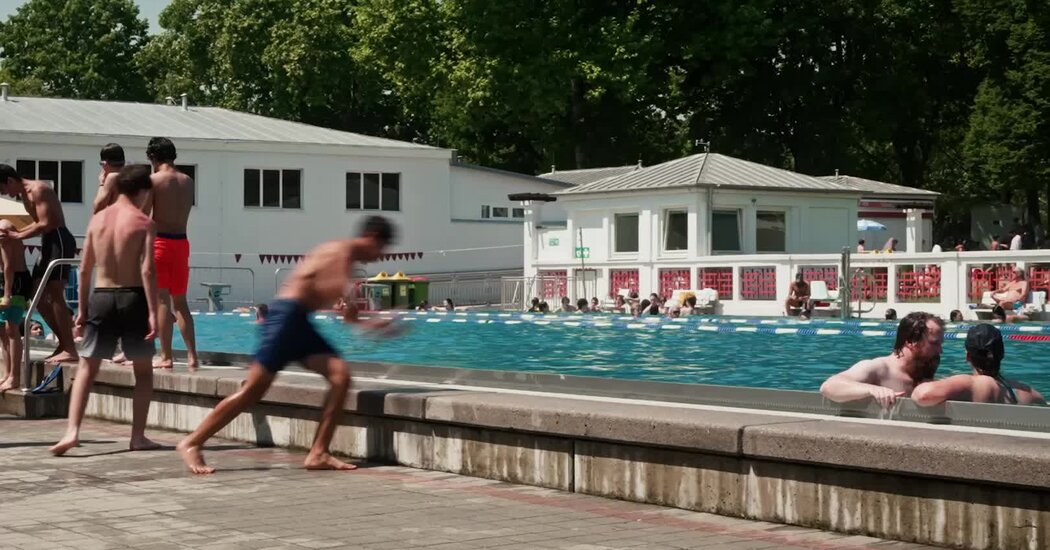
Vienna is often considered one of the most livable cities in the world – and rightly so: the Austrian capital has excellent social housing, lots of green spaces and a lively cultural scene.
But as an expat from Vienna, what I like best about the city’s amenities are the numerous outdoor swimming pools. Many of these hundred-year-old facilities are much more than just swimming pools; Many locals use them as seasonal escapes for sunbathing, reading in the shade under tall lime trees, or drinking a shandy (a lemony drink made from beer and lemonade) at a local cafe.
The outdoor pool season typically runs from early May to mid-September. Daily admission for adults costs around 8 euros; less for seniors and children. Here are six options to consider.
Just a few steps away from Sandleitenhof, a huge urban housing project, is another landmark of Red Vienna: the Kongressbad. When it opened in 1928, it was a state-of-the-art oasis with a 100-meter pool and a 10-meter diving platform. The congress pool, a hotspot for fitness enthusiasts, was the venue for the Austrian Olympic swimming competitions for the 1928 games in Amsterdam.
In the 1980s, the pool was converted into a 50-meter lap pool for lap swimmers and a separate leisure pool for those who prefer to have fun. (The diving board has been replaced by a water slide.) Behind the main pools, a lawn with sun loungers extends towards the cafe. Try the lángos: a savory, fried dough snack with Hungarian roots, whose intense garlic flavor is a summer staple in the city.
If the Kongressbad is the jewel of the working class, the Krapfenwaldl is the bath of choice for the upper bourgeoisie. Located on a hill in the Vienna Woods, it offers spectacular views of the city skyline and the surrounding vineyards. Visitors typically include a combination of leathery vintage cars, young families and beautiful people spending the day in languid tranquility, like Romy Schneider and Alain Delon in “La Piscine.”
Despite all the scenic beauty, the Krapfenwaldl has retained its historical charm. The swimming pool opened in 1923; Its beautiful wood-paneled dressing rooms occupy a space that was formerly a restaurant designed by Josef Pürzl, a Viennese fin-de-siècle architect. Today, visitors can enjoy a coffee on the porch or seek refuge from the crowds in a shady spot under the pine trees.
There’s a ballad by Viennese pop singer Rainhard Fendrich about an ill-fated trip to Italy where his girlfriend leaves him to go live with a polite, Alfa Romeo-driving local. The song ends with the line: “I prefer the goose heap to hell with Italy.” And in fact, the island in the Old Danube is a substitute for a Mediterranean holiday for thousands of Viennese. Known as the “Lido of those who stayed here,” Gänsehäufel includes pebble beaches, a bakery, an ice cream parlor, a tobacconist and bocce courts. Who needs the Adriatic?
If urban lakes aren’t your thing, Gänsehäufel’s amenities also include an aerial adventure park and a wave pool. For those unaware, there is a separate nudist area on site with its own beach and restaurant.
The Schafbergbad is the proud home of the longest water slide in the city. Similar to the Krapfenwaldl, the Schafbergbad is located on a hill in the northwest of the city, on a spacious area of grassy hills. There are several pools as well as snack bars, trampolines, beach volleyball courts and a mini golf course.
But the 335-foot-long waterslide is the pool’s most outstanding feature. A short climb up the blue spiral staircase offers unparalleled views of the city below – not that you have much time to enjoy them before plunging into the jet stream.
The Prater Hauptallee, lined with chestnut trees, is a popular destination for cyclists and runners, and after a trip on the promenade there’s nothing better than a visit to the adjacent Stadionbad, named for its proximity to Austria’s largest football stadium. Both venues opened in 1931 to host events of the Workers’ Olympics, the international labor movement’s counter-program to the Olympic Games.
Today, the stadium pool lives up to its sporting heritage: with two 50-meter pools, the venue is a dream for every lap swimmer. A separate diving pool has a 10-meter platform, although only the one- and three-meter diving boards are open to the public.
Vöslau thermal bath
The health resort of Bad Vöslau is about half an hour’s train ride south of Vienna and has thermal springs that were already used during the Roman Empire. Today, visitors to the Vöslau thermal spa can bathe in these ancient waters and enjoy a magnificent view.
While there are several pools on site, the crown jewel is a man-made swimming hole fed entirely by water from the springs. Dive into the (invigoratingly cool) spring water, then warm up on the grassy island that juts out into the pool. Occasionally the thermal bath turns into a venue for readings and musical performances. These “floating salons” are a nod to an impressive literary heritage: more than a century ago, the Viennese playwrights Hugo von Hofmannsthal and Arthur Schnitzler were captivated by the unique charm of this establishment.