















What geriatric emergency rooms do differently
It had been a tough few months. Cynthia Tompkins was hospitalized in May for osteomyelitis, a bone infection, and then spent six weeks in a rehabilitation facility. “It was a struggle,” she said. “I didn’t come back so well.”
Ms. Tompkins returned to her San Diego home but was still taking antibiotics and a variety of other medications for diabetes, pain and blood clots. The death of her husband last year and her closest friend more recently had dampened her spirits.
In early July, a new symptom appeared: violent vomiting three times in about 24 hours. “I was so exhausted,” she said. “I was getting weaker and weaker.” A friend who was visiting her called an ambulance.
“It’s the last place you want to go, the emergency room,” said Ms. Tompkins, 75, a retired teacher and family programs director. She expected to spend hours on an uncomfortable stretcher in a chilly hallway. When she arrived at the emergency room at UC San Diego Health in La Jolla early that morning, “I was completely out of control,” she said.
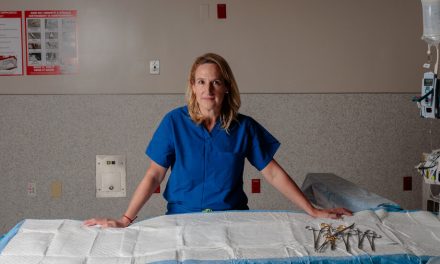
But the place exceeded Ms. Tompkins’ expectations. As of 2022, this and every other adult emergency room in San Diego is accredited as a geriatric emergency department and has been redesigned to address the specific risks and needs of older patients. Recent studies show that this approach can reduce hospitalizations and deaths in older adults and lower costs.
“They took me straight to a room,” Ms. Tompkins said. She was transferred to a stretcher with a thicker mattress to prevent bedsores and was given blankets. “I was immediately given an IV because I needed fluids,” she said.
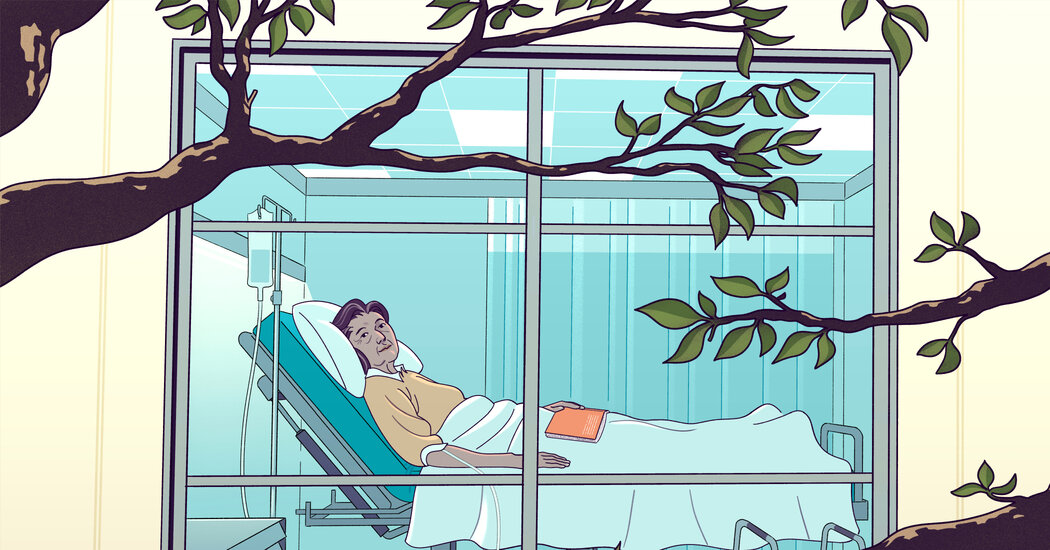
She was glad that the small room, with curtains and sound-absorbing walls to block the cacophony of emergency care, had a padded chair for her friend who would be staying with her, and a window with a view of the trees.
The window also served a medical purpose. Patients “can see whether it’s day or night,” said Denise Valenzuela, the geriatric emergency room nurse assigned to Ms. Tompkins. “It prevents delirium,” the sudden change in mental status that can occur in hospitalized elderly patients and increase the risk of dementia.
Soon, “I just felt a calm,” Ms. Tompkins said. “I felt like I was exactly where I needed to be.”
As of 2017, the American College of Emergency Physicians has accredited 624 such geriatric emergency departments in the United States, including 73 at Veterans Affairs medical centers. “A pretty exponential growth rate,” said Dr. Kevin Biese, the emergency physician who leads the Geriatric Emergency Department Collaborative.
Few of these units are limited to older patients. Instead, like La Jolla’s emergency room, they serve all ages but incorporate senior-friendly practices and protocols in an environment designed to ward off disorientation, falls and other dangers to the elderly. They are ranked from Level 1 (for those who meet the most criteria) to Level 3.
Adults 75 and older visit the emergency room more often than any other age group except infants: 76 visits per 100 people in 2022. Still, standard emergency care is “not properly tailored to the needs of older adults,” Dr. Tuck.
The role of a traditional emergency room is to quickly identify the central problem and either correct it or send the patient to the hospital for further care. “We ask, ‘What is your chief complaint?'” said Dr. Tuck. “You fell down the stairs and broke your leg.”
However, it is rare for older patients to have just one condition. Like Ms. Tompkins, most struggle with multiple chronic illnesses, take multiple prescriptions and require a variety of tests and assessments. Trained geriatric emergency teams focus not only on the broken leg, but also on figuring out what caused the fall and how to prevent another fall.
“An emergency department does not routinely screen for delirium” and cognitive impairment, Dr. Ula Hwang, an emergency physician and researcher at NYU Langone Health. “But it is one of the first things geriatric emergency departments will do,” along with a careful review of all of the patient’s medications.
Geriatric emergency departments also try to address sensory impairments, which also contribute to delirium, by distributing reading glasses and sound amplification devices. They dim bright lights and offer eye masks and earplugs to promote sleep. If Ms. Tompkins had forgotten her walker, the unit would have loaned her one.
These emergency rooms also aim to address a growing problem in emergency rooms: hours or even days spent in “boarding,” as admitted patients wait for free beds before they can leave the emergency department
“Prolonged residential schooling has increased among older adults,” said Dr. Cameron Gettel, an emergency physician and researcher at Yale School of Medicine. refers to waiting times that last more than three hours. He co-authored a study on this topic in Health Affairs Scholar.
Spending more time boarding isn’t just inconvenient or inconvenient. Researchers studied patients aged 75 and over in emergency rooms across France. They found that those who stayed there overnight before being transferred to an inpatient ward had a higher in-hospital mortality rate (15.7 percent) than those who were admitted to a ward before midnight (11.1 percent). Boarding overnight was also associated with more falls and infections.
What geriatric emergency personnel prefer, however, is to help patients avoid hospitalization altogether. “For an older adult, the shot may not be the best,” Dr. Hwang. “It could be the worst.”
She said hospital patients are exposed to infections, staff errors and the rapid deconditioning that comes with bedridden days. They all pose a greater risk to older patients.
Previous studies have found fewer admissions from geriatric emergency departments, but most of these studies involved one or two hospitals. Now Dr. Hwang and her team used nationwide data from the Federal Health and Pensions Study and Medicare claims from nearly 4,600 adults over age 65 and compared those treated in geriatric emergency departments with a matched group in standard emergency rooms.
The differences were clear: Patients in the geriatric departments were 39 percent less likely to be hospitalized and 38 percent less likely to die within 30 days. According to a previous study conducted by Dr. Hwang led, geriatric emergency departments also saved Medicare up to $3,000 per visit.
So the fact that there are more than 600 accredited geriatric emergency departments nationwide represents both great progress and, in a country with more than 5,000 emergency rooms, missed opportunities, said Dr. Tuck.
“I would encourage people to ask themselves why their hospitals don’t have an accredited GED,” he added. “We should demand that.”
In La Jolla, Ms. Tompkins began to feel stronger. The intravenous fluids provided anti-nausea medication and corrected the electrolyte abnormalities her lab work revealed. She was able to drink water and juice and eat some graham crackers.
A series of further tests and scans revealed no serious concerns. After completing a geriatric evaluation, Ms. Valenzuela, the nurse, suspected that Ms. Tompkins had not been eating well and was taking medication on a mostly empty stomach.
Around 6 p.m., Ms. Tompkins and her doctor agreed that she could return home. She left the hospital with phone numbers to call for further help, and several staff members called to see how she was doing.
Better, was her answer. “They took care of me as a whole and put me on the right path,” Ms. Tompkins said. “I’m making progress. It’s slow, but I’m fine.”
The New Old Age is produced in collaboration with KFF Health News.