















“Too rare to care”? A new center for rare diseases wants to change that

David Liu of the Broad Institute receives at least 20 messages every week from desperate parents. They will explain that their child suffers from an extremely rare and devastating disease caused by a mutated gene. Can he help them develop gene therapy?
Dr. Liu, a gene-editing researcher, answers honestly: Although there is scientific evidence—researchers can edit and silence the genes that cause disease relatively easily—the system for developing treatments for rare diseases is simply not economically feasible. It usually takes years and hundreds of millions of dollars.
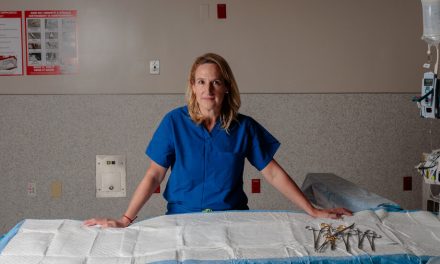
The catchphrase, said Dr. Wendy Chung, of Boston Children’s Hospital, is “too rare to care.”
Now hope Dr. Liu, Dr. Chung and her colleagues at the Broad Institute, Boston Children’s and the Jackson Laboratory are trying to change that mentality. On Tuesday, they announced the creation of a new nonprofit organization, the Center for Therapeutic Genetics, to develop gene therapy treatments that can be used and repurposed for one disease at a time.
The treatments developed by the center would be considered routine procedures rather than medications. In any case, only the instructions to a gene editor would be changed. There would be no need to start over for each patient.
In principle, with more centers like this, the new approach could improve the lives of millions of people, Dr. Liu. Approximately 400 million people worldwide and 25 to 30 million in the United States suffer from a rare disease. Half are children and a third die before they turn five.
The project begins with a $34.5 million contract from the Advanced Research Projects Agency for Health, a federal agency that supports high-risk, high-reward medical research. The initial focus is on neurological disorders that can lead to seizures. The researchers hope this work will show how an editing system that fixes mutations in brain cells can be used for more than one genetic brain disease, including those that affect adults like Huntington’s disease.
David Liu of the Broad Institute developed methods for editing genes.Credit…Jessica Rinaldi/The Boston Globe, via Getty Images
The first, called childhood alternating hemiplegia, or AHC, affects only 400 children in the United States. Among them is 10-year-old Annabel Frost. Her parents, Simon Frost and Nina English Frost, who live in Washington, have made gene therapy for children with AHC the focus of their lives.
When Annabel was 2 months old, she started having seizure-like episodes and recurring attacks of paralysis – her limbs, even her entire body, were immobile for days or even a week. Her parents traveled across the country consulting neurologists, but no one knew what was wrong.
After finally receiving a diagnosis of AHC and learning there was no cure, the Frosts founded a nonprofit and began raising money; They have raised more than $4 million in the last eight years. But expecting families to go that route — fundraising, organizing golf tournaments, sponsoring 5K races — “is very unfair,” Dr. Chung, especially when parents are caring for a sick child. And it’s still almost never enough to get a company interested in developing a treatment.
Ms. Frost said she and Mr. Frost knew this. That’s why her foundation specifically supported research that laid the foundation for gene therapy for AHC. Then they turned to Dr. Liu. “We didn’t just bring an illness to David and ask him to solve it,” Ms. Frost said. “We offered him a mature scientific opportunity.”
Dr. Liu’s group had extended the lives of mice with Niemann-Pick, a genetic brain disease, which gave them hope. For AHC, Ms Frost said: “We wanted it to target the same cells.”
But it’s much easier to get a gene editor into the brain of a mouse than into the brain of a human. In mice, scientists can simply inject the editor into their tiny brains. This won’t work on humans. The challenge is to get a deactivated virus carrying gene-editing instructions through the blood-brain barrier, a membrane that protects the brain from infections and toxins.
But researchers at the Broad Institute led by Ben Deverman have found a way. They can hijack a carrier protein that transports iron to the brain.
This discovery, said Dr. Timothy Yu, a team member at Boston Children’s, “was a real lightbulb moment.”
Treatment involves an intravenous injection of the engineered virus, which crosses the blood-brain barrier and enters the brain’s intracellular space. From there, the editor gets into brain cells, where it slides along the DNA to mutate. Then the editor will convert the mutated gene into a healthy one.
The plan is to initially treat the children most affected by AHC. Annabel is not one of them and therefore will not come first.
The method is also used to treat another neurological disorder, a genetic form of severe childhood epilepsy called Dravet syndrome, which occurs in about one in 15,700 births. Twenty percent of patients die before they turn 18, said Mary Anne Meskis, executive director and co-founder of the Dravet Syndrome Foundation. Many die in their sleep.
“Our parents live every day in fear that if we put the child to sleep at night, the child might not wake up,” said Ms. Meskis, who lives near Asheville, North Carolina
Ms. Meskis’ 26-year-old son, Elliot, had his first seizure when he was 6 months old. It took an hour before emergency doctors could stop it. The next month he had another one. Another one next month. When Elliot was 18 months old, he began having thousands of brief seizures every day that caused him to blink or suddenly jerk his head. He had episodes of paralysis that could last days or even a week.
When Elliot was 4 years old, his parents finally received a diagnosis of Dravet. He began taking multiple medications daily that shortened the duration of his seizures, but he functions at the level of a 3- to 5-year-old and does not have expressive language.
Dr. Liu and his colleagues corrected Dravet in mice by injecting a gene editor into the animals’ brains, a proof of principle. Now they’re going to try it on humans.
Elliot’s brain may be too damaged at his age for gene therapy to cure him. However, the hope is that it could help or cure young children.
The center will not solve the problem of making genetic therapies available to patients overnight, its founders emphasized. But researchers hope the work will lead to methods that other doctors can pick up and apply to their own patients.
To achieve this, the Center will make its work public whenever possible. “This is something that for-profit companies don’t typically do, but is necessary to make real progress,” Dr. Mark Kay, head of the division of human gene therapy at Stanford University and not involved in the new center. “I really like this idea and support it,” said Dr. Kay.
At first it will be difficult, predicted Dr. Chung. But she feels a sense of urgency.
“My patients don’t have time to wait,” she said. “We will lose a generation.”