














FDA chief Marty Makary on GLP-1 copies, vaccines, China
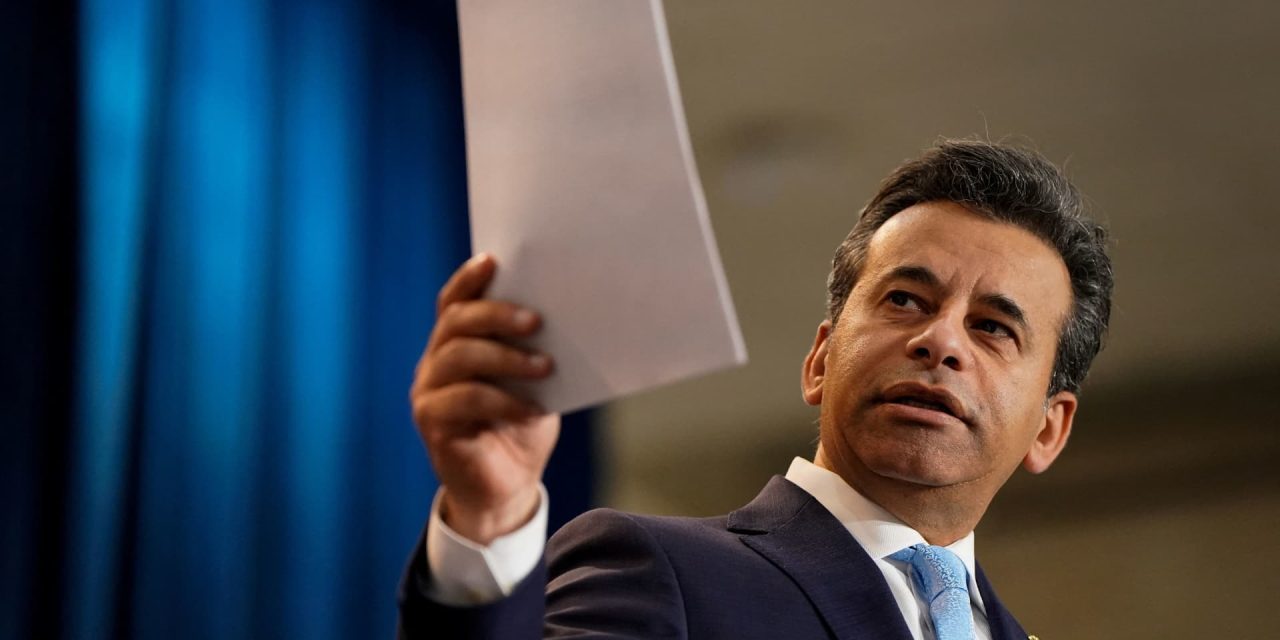
U.S. Food and Drug Administration (FDA) Commissioner Marty Makary presents a study from The Lancet while announcing the FDA’s intention to phase out the use of petroleum-based synthetic colors in the nation’s food supply during a press conference at the Department of Health and Human Services in Washington, DC, USA, April 22, 2025. REUTERS/Elizabeth Frantz
Elizabeth Frantz | Reuters
A version of this article first appeared in CNBC’s Healthy Returns newsletter, which brings the latest health news straight to your inbox. Subscribe here to receive future editions.
This week, during a trip to Washington, DC, I had the opportunity to speak with Food and Drug Administration Commissioner Dr. Marty Makary, sitting together
Our conversation came amid a contentious period for the FDA, marked by a leadership transition, massive staffing and budget cuts, and sweeping changes to the agency’s vaccine policy and drug approval approach. Most recently, the back-and-forth over Moderna’s flu shot has fueled industry concerns about regulatory consistency.
Here’s what Makary had to say about some of the most important issues facing the pharmaceutical industry.
Watch my interview with Makary here.
Bulk processed GLP-1
Makary said the FDA is “serious” about cracking down on the illegal mass mixing of GLP-1.
This follows the FDA’s announcement of action against telehealth company Hims & Hers, which is mass-marketing compounded versions of it Novo Nordisk‘s Wegovy pill and injections.
The FDA said it plans to restrict the use of GLP-1 ingredients in unapproved compounded drugs, citing concerns about quality, safety and possible violations of federal law.
Makary said manufacturers of brand-name drugs go through the FDA process “properly” by conducting clinical studies that demonstrate a product’s benefits. The agency also regulates the marketing claims for these drugs and requires, for example, that side effects be depicted in advertising.
But Makary said: “Sometimes we have seen companies violating these regulations.” The FDA is “talking directly to these companies and saying you have to play by the rules,” he added.
Asked whether 2026 could mark the end of illegal mass production of GLP-1, Makary said: “I hope so.” The FDA sees more and more companies sourcing their active pharmaceutical ingredients from Novo Nordisk and Eli Lilly, “and this system works.”
“If [Novo and Lilly] We provide APIs and the composition complies with regulations. The more competition the better,” he said.
Moderna’s flu protection application
Notably, my conversation with Makary took place the day before the FDA agreed to review Moderna’s experimental mRNA flu shot, reversing the agency’s earlier decision to decline to accept the application. The FDA is now scheduled to decide on the approval of the flu vaccination on August 5th.
Makary did not indicate that the authority would change its decision. Instead, he said the FDA’s guidance to Moderna on its vaccination was “pretty clear.”
“I think the FDA’s individual consultation process, where the companies meet with the FDA scientists, is pretty strong and those guidelines are pretty clear about how they want to design the trials,” he said.
The agency recommended that the group of participants in the study aged 65 and older who did not receive Moderna’s shot should receive the “standard of care, not the substandard standard of care” as a comparator, Makary said. Previous feedback from the FDA made it clear that Moderna preferred to use a higher-dose vaccine for older adults as a comparator in the study.
Moderna has disputed that argument, pointing out that FDA rules and guidelines do not actually require that the most advanced or high-dose vaccine be used as a comparator in clinical trials. The company has also said it disagrees with the FDA’s previous written communication about the study design, even before the study began, in which the agency said the use of the standard flu shot was “acceptable.”
When asked about his stance on mRNA technology, Makary said he was “hopeful and optimistic” about the platform but would also “like to see the data.” Health and Human Services Secretary Robert F. Kennedy Jr. and some of his supporters have criticized the technology as unsafe.
“We’re not going to be ahead of the game,” he said. “Basically we’re saying: We’d like to see the data, to what extent mRNA technology can be applied is a question we’d like to see it applied to, to the extent it can be applied, but it has to meet our scientific standards, so we’ll see what it does with cancer and other infectious diseases…”
China
Makary also warned that the U.S. is falling behind China in early drug development and called for reforms to streamline the way new treatments get into clinical trials.
China’s biotech sector has grown rapidly in recent years, fueled by large government investments, deep talent pools and faster regulatory timelines. U.S. policymakers are facing increasing pressure to encourage domestic innovation rather than try to hinder it in China.
“We’ve gotten into a mess,” Makary said, citing the gap between the U.S. and China in Phase 1 trials in 2024.
Makary pointed to three key bottlenecks: hospital contracts, ethics reviews and approvals, and the process for submitting investigational new drug (IND) applications, which allows companies to begin testing on humans.
He described the first two as “cumbersome processes that take too long and make us uncompetitive with countries that are moving much faster.” On the latter, he said the FDA had added too many questions to the application over the years.
“They never removed questions,” he said. “If a question has received the same positive answer for the last 10,000 times out of 10,000, then why are we asking?”
He said the FDA is looking at “everything,” including possible partnerships with health systems and academic medical centers to speed up the pre-IND process.
The Trump administration should “work with industry to help them bring more cures and meaningful treatments to the American public,” Markary said, calling the effort a “bipartisan priority.”
Feel free to send tips, suggestions, story ideas and data to Annika at a new email address: annika.constantino@versantmedia.com.