













Over 100,000 Muslim worshipers in Al-Aqsa during the first Friday prayer after the reopening of the holy sites in Jerusalem
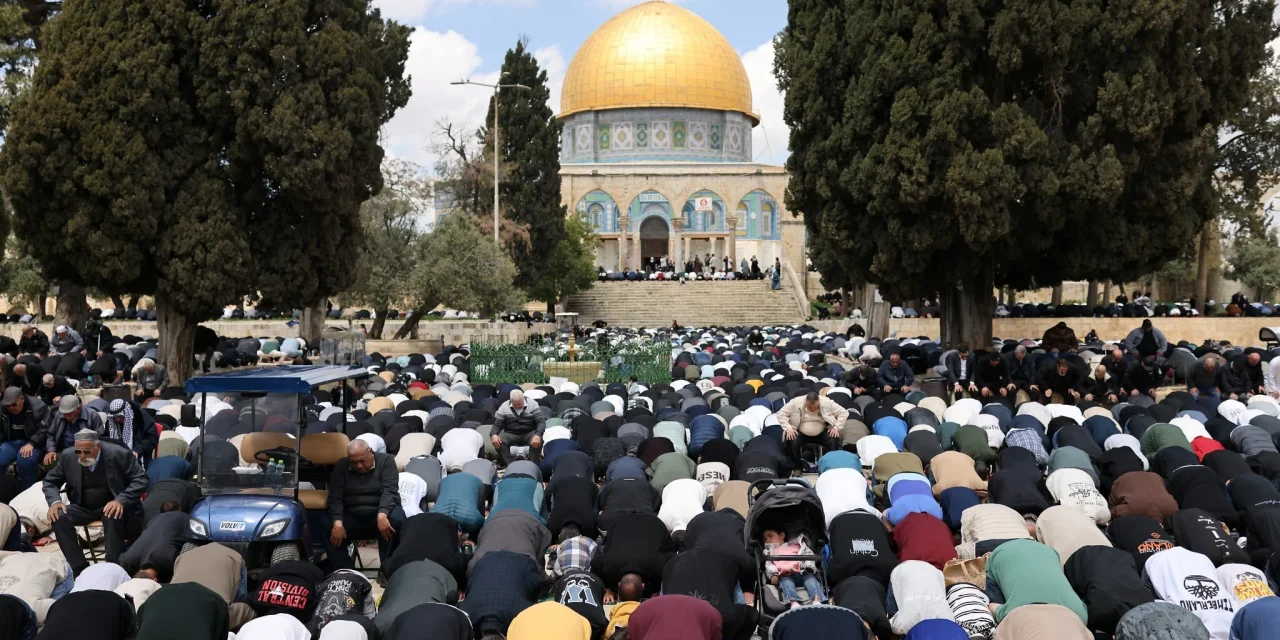
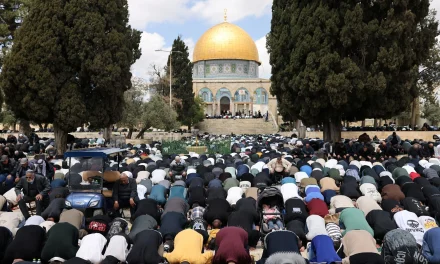
More than 100,000 Muslim worshipers performed Friday prayers at the Al-Aqsa Mosque on the Temple Mount in Jerusalem, the holy site’s Islamic authority reported, after it reopened the previous day following a ceasefire between the United States and Iran.
Jerusalem’s Old City is home to key holy sites of all three Abrahamic religions, which have been closed due to security restrictions since the start of the war sparked by the US-Israeli attack on Iran on February 28, as Iran fired hundreds of missiles at Israel, including at least two that landed in and around the Old City.
Restrictions were in place banning gatherings of more than 50 people at all holy sites in the Old City, including Al-Aqsa, the Western Wall and the Church of the Holy Sepulcher.
The sites reopened to worshipers on Thursday, a day after Washington and Tehran declared a two-week ceasefire in the Middle East war.
Even during the holy month of Ramadan this year, Muslim worshipers were not allowed access to Al-Aqsa Mosque.
Get the daily edition of The Times of Israel
by email and never miss our top stories
By registering you agree to the terms and conditions
More than 100,000 Muslims performed weekly Friday prayers at Al-Aqsa on Friday, according to the Islamic Waqf, the Jordanian body that manages the site.
Footage showed the area was full of believers.
Muslim worshipers pray in front of the Dome of the Rock on the grounds of the Al-Aqsa Mosque on the Temple Mount during Friday noon prayers in Jerusalem’s Old City on April 10, 2026, after Israeli authorities closed it for 40 days due to the Iran war. (AHMAD GHARABLI / AFP)
“Hopefully Al-Aqsa will not be closed again and everyone can come to this holy place – whether residents of Jerusalem or from the West Bank,” said 30-year-old Mohammad Saaedeh.
Palestinians from the West Bank remain subject to strict Israeli restrictions based on age and approval quotas, most of which have been in place since the Hamas massacre on October 7, 2023.
“Friday prayer is an obligation for us, but performing it in Al-Aqsa is completely different,” said Sharif Mohammad, 39.
“It’s an indescribable feeling,” Ahmad Ammar, 55, added.
The Temple Mount is revered by Jews as the historical site of the two Jewish temples, making it the holiest site in Judaism. It is also the third holiest shrine for Muslims, who refer to it as Al-Aqsa Mosque or Noble Sanctuary. The location has often been a flashpoint for violence in the region.
Israel is also preparing for the Holy Fire Ceremony scheduled for Saturday – an annual event celebrated by Orthodox Christians a day before Easter that often draws large crowds to the Church of the Holy Sepulcher.
Ethiopian Orthodox Christian pilgrims carry crosses during the Good Friday procession in the Old City of Jerusalem on Friday, April 10, 2026. (AP Photo/Mahmoud Illea)
Police said they had held meetings with Jerusalem’s Christian leaders in recent weeks, which had “strengthened coordination with the various denominations” ahead of the event. They said they had set a maximum capacity limit but did not provide details on the number of people.
During hostilities with Iran, the Old City served as a flashpoint of controversy for Jews, Muslims and Christians, raising questions about freedom of religious practice in wartime.
Earlier this week, before the ceasefire was declared, Jewish religious leaders filed a petition with the Supreme Court demanding an easing of restrictions on public gatherings at the Western Wall and Temple Mount.
The judges then increased the number of people allowed at the sites from 50 to 100.
In March, police sparked an international outcry after barring the Latin Patriarch from entering the Church of the Holy Sepulcher on Palm Sunday. Police later reached an agreement with the Latin Patriarchate for a limited number of Christian prayers at the site.
Christian believers visit the Church of the Holy Sepulcher in Jerusalem’s Old City after it reopened to the public following a ceasefire in the Iran War, April 9, 2026. (Yonatan Sindel/Flash90)
In the second half of Ramadan, law enforcement closed the Al-Aqsa Mosque due to the war, leading to Muslims praying en masse outside the walls of the Old City on Friday morning. Police violently broke up several of these gatherings, citing Home Front Command regulations.
In addition to reopening holy sites in Jerusalem, Israeli authorities have lifted most restrictions related to the state of emergency over the war with Iran.
This excludes the country’s northern border area near Lebanon, where the war against Iran-backed Hezbollah continues.
They value our war journalism
They clearly find our careful reporting on the Iran War valuable at a time when facts are often distorted and reporting often lacks context.
Your support is essential to continuing our work. We want to continue delivering the professional journalism you value, even as the demands on our newsroom have increased dramatically during this ongoing conflict.
So consider joining our reader support group today. The Times of the Israel Community. For just $6 a month, you can become our partner and enjoy The Times of Israel at the same time AD FREEand access to exclusive content only available to members of the Times of Israel community.
Thank you very much,
David Horovitz, founding editor of The Times of Israel
Join our community. Join our community. Are you already a member? Log in to stop seeing this