












Obesity pill Eli Lilly maintains weight loss after Wegovy and Zepbound

The Eli Lilly & Co. logo at the company’s Digital Health Innovation Hub in Singapore, on Thursday, November 14, 2024.
Ore Huiying | Bloomberg | Getty Images
Eli Lilly said Thursday that its closely watched obesity pill helped patients maintain most of their weight loss after they switched straight from taking the Zepbound and company’s injectable syringe Novo Nordisks rival shot Wegovy late in the trial.
The company also announced that it had applied to the Food and Drug Administration for approval of a daily GLP-1 anti-obesity pill called orforglipron. The FDA announced in November that it had granted this pill a priority review voucher, which could shorten the review period to a few months.
Shares of Eli Lilly rose more than 2% on Thursday following the announcement.
The positive trial data suggests the pill could be an effective interim treatment for patients who want to maintain weight loss but don’t want to take weekly injections long-term. Many people who stop these vaccinations regain much of the weight they originally lost.
While Eli Lilly’s pill appears to cause less weight loss overall than existing injections, Thursday’s results underscore its potential role as a needle-free maintenance therapy in the blockbuster GLP-1 market. But an oral obesity pill from Novo Nordisk is likely to hit the market first, giving the Danish drugmaker a head start in staking its claim in the space.
The Phase III study followed more than 300 patients with obesity who had previously taken Wegovy or Zepbound for 72 weeks in a separate late-stage study. These people were then randomized to receive either the Eli Lilly pill or a placebo for an additional 52 weeks. The oral drug met the study’s main goal of demonstrating superior weight loss maintenance compared to a placebo in people who had previously plateaued in their progress while taking the injections.
On average, patients who switched to Novo Nordisk’s Wegovy pill only regained about 2 pounds of the weight they initially lost by the end of the study. Meanwhile, people who switched to the Zepbound pill only regained about 11 pounds of the weight they initially lost by the end of the study.
This means that people in the Wegovy group maintained about 95% of their weight loss after the switch, while people in the Zepbound group maintained about 80%.
“Obesity is a chronic, progressive disease and maintaining weight loss remains a significant challenge for many,” said Kenneth Custer, president of Lilly Cardiometabolic Health, in a press release.
He said the study showed that the pill “helped people maintain the weight they had worked hard for” and that if approved, it “could be a convenient alternative for millions of people living with obesity around the globe to continue their long-term health journey.”
While people in the Zepbound group appeared to regain more weight, the larger focus is likely on those who switched from the drug’s main competitor, Wegovy.
In an October note, Evan Seigerman, an analyst at BMO Capital Markets, said positive trial results could give Eli Lilly “a unique opportunity to capture revenue share” from chronic treatment with semaglutide, the active ingredient in Wegovy and Novo Nordisk’s diabetes injection Ozempic.
“Realizing the potential for Novo’s flagship product,” Seigerman wrote.
In a note Thursday, Leerink Partners analyst David Risinger said the data “will help drive commercial success and improve consensus expectations” for Eli Lilly’s pill. He said the company expects the drug to bring in $2 billion in sales by the end of 2026, $9 billion by the end of 2027 and $16 billion by the end of 2028.
Dr. Caroline Apovian, co-director of the Center for Weight Management and Wellness at Brigham and Women’s Hospital, said the results were “still great,” although patients regained some of the weight lost.
But she said, “For this to be a good switch, these oral medications have to be cheaper for insurance companies than the injectable medications, right?” Currently, list prices for bariatric injections without insurance are about $1,000 a month, although both Eli Lilly and Novo Nordisk have lowered the direct prices of their drugs for cash-paying patients.
It’s unclear how the companies will price their respective pills. But under recent deals with President Donald Trump, the companies said starting doses of their upcoming oral medications, pending approval, will be $149 a month for anyone who gets them through the direct-to-consumer website TrumpRx. This website launches in January.
The overall safety and tolerability – or how well patients cope with treatment – of the pill was consistent with previous late-stage studies. The most common adverse reactions were gastrointestinal in nature and generally mild to moderate in severity.
More CNBC Health coverage
Around 4.8% of people who switched to the Wegovy pill stopped treatment due to side effects, while 7.2% of those who switched to the Zepbound oral medication did the same. Meanwhile, these rates were 7.6% and 6.3% in patients who switched to Wegovy and Zepbound placebo, respectively.
According to Eli Lilly, no liver safety issues were observed. The full results of the study, called ATTAIN-MAINTAIN, will be presented at an upcoming medical meeting and published in a peer-reviewed journal next year.
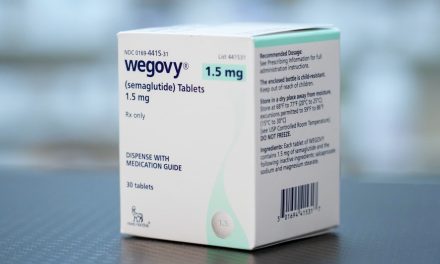
Eli Lilly’s pill works in a similar way to the diabetes pill Rybelsus from Wegovy, Ozempic and Novo Nordisk, targeting a gut hormone called GLP-1 to suppress a person’s appetite and regulate blood sugar. Novo Nordisk is also seeking approval of an oral version of Wegovy for obesity, which could come by the end of the year.
But unlike these three treatments, Eli Lilly’s pill is not a peptide drug. This means that it is more easily absorbed by the body and does not require dietary restrictions, as is the case with Rybelsus or oral Wegovy.
In an August note, analysts at Goldman Sachs predicted that by 2030, pills will take a 24% share – or about $22 billion – of the global weight-loss drug market, which they estimate will be worth a total of $95 billion.
They said they expect Eli Lilly’s pill to have a 60% share – or about $13.6 billion – of the daily oral market segment in 2030. They expect Novo Nordisk’s oral semaglutide to have a 21% share – or about $4 billion – of this segment.