












New ACA plans could increase family deductibles to $31,000
The Trump administration’s proposed new rules for Obamacare plans next year would shift more health care costs to Americans, with much higher deductibles that could lead to higher medical bills.
Under the proposal, people who rely on the Affordable Care Act for their health insurance coverage would be able to choose plans with significantly lower monthly premiums. But that could leave them exposed to medical costs thousands of dollars higher than ACA plans now, before their insurance takes effect.
Heading into the midterm elections, offering these new plans is one of the Trump administration’s few ways to lower Obamacare premiums that don’t require congressional approval. Affordability has become the Democrats’ campaign mantra: A recent poll by KFF, a health research group, ranked health care costs as the top economic problem.
In his State of the Union address, Trump blamed the Affordable Care Act for the “crushing costs of health care” and said the program funneled money to big insurance companies. He advocated passing the payments directly to Americans so they could “buy their own health care, which would be better health care at a much lower cost.”
However, Congress would have to pass a law to allow the money to be redirected or make major changes to the program. Instead, the government is proposing a set of rules that would allow new plans to be introduced, including ones that are much more cost-effective than those available today. These plans are supported by Republicans who believe that people will be much more successful at finding low-cost health care if they spend their own money on a doctor or treatment.
The government has “done what it could within the law to expand consumer choice and keep premiums low,” said Joel White, a health policy analyst who advises Republicans.
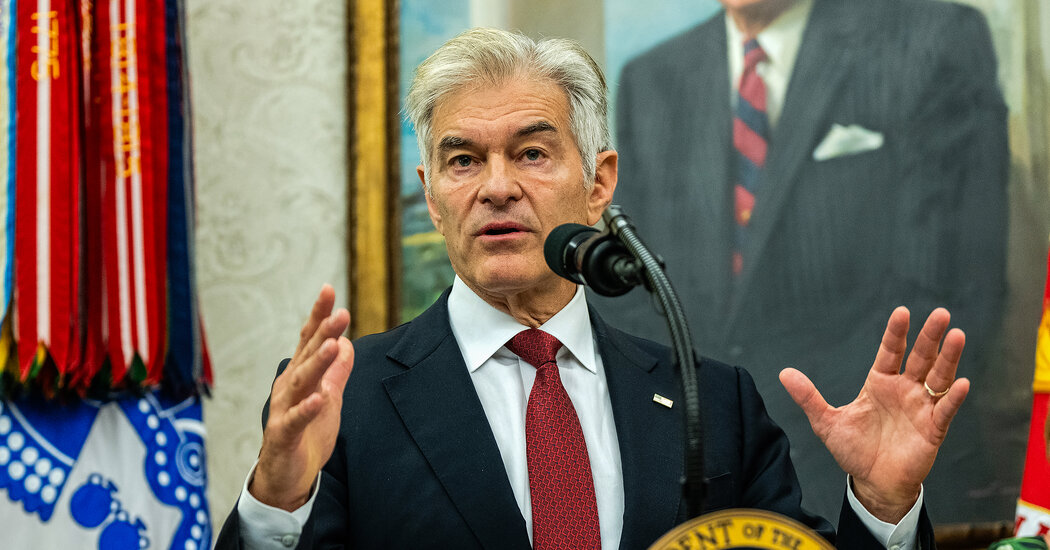
Dr. Mehmet Oz, the administrator of the Centers for Medicare and Medicaid Services, which oversees the Obamacare markets, supported the new proposal. “The goal is simple: lower costs, more choice and exchanges that work as intended,” he said. The agency declined to make anyone available to discuss the proposal.
Critics of the new approach warn that consumers are already forgoing expensive health insurance coverage. More than a million people have opted out of Obamacare so far this year, a decline that many attribute to the Republican-controlled Congress’ decision to phase out increased subsidies late last year.
Millions of people who relied on Obamacare’s subsidy cushion faced monthly premiums that were double or higher than last year.
The new suggestion from Dr. Oz would allow one type of health insurance to increase annual deductibles to more than $15,000 for an individual and $31,000 for a family; These are much higher than the current Obamacare plans. The individual deductible would be eight times the average for someone with professional insurance.
Many policy experts expressed doubt that the government’s proposal would reduce the high cost of health care. “Nobody wants this product,” said Amitabh Chandra, a Harvard health economist who has studied high-deductible plans. “It’s going to be a really cheap product that no one wants.”
The proposal involves a type of plan known as a catastrophe or skinny policy. Even if they are suitable for someone who is young and healthy, a sudden visit to the emergency room or an unexpected hospital stay can cost thousands of dollars in unforeseen bills. People with chronic illnesses may also have to pay for much – if not all – of their care out of pocket.
Dr. Joseph R. Betancourt, president of the Commonwealth Fund, which funds health research, pointed out that people are already struggling to pay for their medical care.
“There is no doubt that we have an affordability crisis,” he said. “If we shift more of the burden onto patients, there is a possibility that the crisis will become even worse.”
The proposed ACA rules include numerous potential changes to the Obamacare markets. Some would make it harder for people to enroll, while others would redefine what services must be covered by a plan — adult dental care would no longer be considered an essential benefit.
The proposal could also undermine other consumer protection measures. Overall, according to the administration’s own estimates, the rules could lead to up to two million people losing their insurance coverage in 2027.
The government’s proposal would also initiate other plans that could lead to significant restrictions on access to doctors and hospitals. Some people may find themselves without a dedicated network of sources for medical care, forcing them to seek care themselves and risk high bills.
Insurance companies could potentially sell multi-year policies as well as plans that don’t offer an established network of hospitals and doctors. These plans would instead pay a fixed amount for a doctor’s visit or treatment, and patients would have to pay any price differences.
Many people who are sticking with Obamacare are already opting for cheaper, less comprehensive plans. In California, for example, more than a third of respondents chose bronze plans with the highest out-of-pocket costs that are eligible for subsidies. Last year, less than a quarter of Californians chose this option.
The government’s proposal focuses on catastrophic plans, policies originally intended in the law as a last resort for those who could not afford other coverage. They are not eligible for federal grants and were typically available to people under 30. Before the proposed high deductibles are reached, individuals could still be entitled to some preventive services such as check-ups and cover three GP visits per year.
Catastrophic plans were unpopular, especially because some bronze plans are not much more expensive.
Public comments on the government’s new proposal have so far drawn about 50 responses since the proposal was introduced earlier this month. A public comment from a California resident described the situation of his son, who suffers from diabetes and requires expensive specialist visits and treatments due to his condition.
Higher deductibles would “mean he would not have access to these vital supplies and visits, resulting in hospitalization or death,” the California father wrote, calling on the government to instead reinstate the expanded subsidies so people could purchase better coverage.
Others fear creating substandard insurance. “We normalize hardship and we normalize disaster,” said Katherine Hempstead, a senior policy adviser at the Robert Wood Johnson Foundation. The new rule “does not attempt to create anything comparable to employer insurance,” she said.
Republicans argue that high-deductible plans will encourage people to actively shop for medical care, choose cheaper doctors and forego unnecessary treatments. They see Obamacare as a handout to big insurers and believe consumers should decide for themselves which doctors and hospitals they want to use.
Mr. White, the analyst, supported the no-network plans and said overall health care prices would ultimately fall if people were given the opportunity to find the best deal. “It’s extremely consumer-friendly,” he said.
Additionally, the plans without networks would most likely be significantly cheaper. The companies offering them would not have to negotiate with providers or incur high administrative costs to decide whether to settle a claim.
Ellen Montz, a former Obamacare regulator who is now chief executive of the consulting firm Manatt Health, warned that regulators need to ensure that people actually have access to care under plans without an established network.
Someone with a costly condition would need to find providers who accept the prices set by an insurer. “It’s an important consumer protection,” she said.
Another risk is that, because of their lower cost, these plans end up serving as a benchmark for the level of subsidies in a given market. People who want a traditional plan with an established network could end up paying more because they get a smaller subsidy.
Sidecar Health, a California-based insurer, appears to be the only company offering out-of-network Obamacare plans. Dr. Marty Makary, the commissioner of the Food and Drug Administration, is a former adviser to the company.
“Our goal is to get people to treat their health care expenses like their own,” Sidecar CEO Patrick Quigley said in an interview. He declined to disclose the size of Sidecar’s customer base.
If patients cannot find a doctor who accepts the health insurance plan, they risk high medical bills.
“It will not function as insurance as most people understand it and what most people are looking for,” said Katie Keith, a health policy and law expert at Georgetown University who has written extensively about the proposed rules.
Margot Sanger-Katz contributed reporting.