













Pfizer executives discuss obesity drug Metsera

Albert Bourla, Chairman and CEO of Pfizer, speaks at the Wall Street Journal’s Future of Everything Festival in New York City, USA on May 22, 2024.
Andrew Kelly | Reuters
A version of this article first appeared in CNBC’s Healthy Returns newsletter, which brings the latest health news straight to your inbox. Subscribe here to receive future editions.
Pfizer made one thing clear this week: It’s officially back in the obesity race.
The drugmaker is focusing on bringing treatments to market from its $10 billion acquisition of obesity biotech Metsera. On Tuesday, promising phase 2 trial data was released on an injection called PF′3944, which is the furthest in development.
The experimental drug led to significant weight loss when taken once a month in a mid-stage trial – early evidence that the injection can be given less frequently than existing medications without sacrificing effectiveness. That could be a boon for Pfizer after the company suffered several setbacks as it tried to capture part of a market dominated by weekly shots from Eli Lilly and Novo Nordisk, as well as Novo’s new daily pill.
Patients with obesity or overweight lost up to 12.3% of their weight at week 28 compared to placebo in the ongoing Phase 2 trial. The company said no plateau was observed after patients transitioned to monthly dosing, suggesting continued weight loss can be expected as the study continues through week 64.
However, investors are still waiting for full data from that study, which is scheduled to be presented at a medical conference in June. Pfizer also plans to start 10 Phase III trials of the shot, aiming for the first of several possible approvals in 2028.
I spoke with Pfizer CEO Albert Bourla and other top executives this week about the data and the company’s broader obesity strategy. Here’s what they had to say.
A potential “best-in-class” product
Bourla told CNBC that the data showed the monthly product had a “very competitive profile in terms of tolerability and effectiveness.”
Pfizer plans to use a higher dose of the drug in Phase 3 trials, and Bourla said it will provide efficacy and tolerability data that are “perhaps best-in-class, so better than anything else,” with less frequent dosing. The company’s modeling suggests the higher dose could result in a 16% weight loss at week 28.
In the phase 2 study, patients started with weekly injections of the drug for 12 weeks before switching to once-monthly dosing.
Pfizer also plans to study people who already take GLP-1 weekly and give them the option to switch to the company’s monthly vaccination, Dr. Jim List, Pfizer’s chief internal medicine officer.
List said that was one of the selling points for the company’s shot: It could serve as a more convenient maintenance therapy that patients could switch to.
“If you say, listen, I can give you one of these medications. You take this one once a week for the rest of your life. But this other one you take once a week, and you could switch it to once a month. Which one do you want?” List said. “It will always be the one with more options.
He added that “weekly doesn’t work for everyone” because some patients need to travel and can’t keep their injections refrigerated.
Bourla said people who have received weekly injections are also more likely to switch to another vaccination rather than an oral option.
“Oral treatment will be for people, but they didn’t start with the needle,” he said. “So I think the monthly or longer-term products are probably going to become the standard, and we’re the first and hopefully the best.”
Combination therapies
A key part of Pfizer’s strategy for the PF′3944 injection is to combine it with another drug called amylin, which targets a gut hormone, List said.
“We expect even greater weight loss with this combination than with this GLP-1 alone,” he said.
Amylin is a hormone that is secreted along with insulin in the pancreas to suppress appetite and reduce food intake. Amylin treatments have a similar effect to GLP-1s like Lilly’s Zepbound and Mounjaro, but some analysts and researchers say it could be easier for patients to tolerate and help them maintain lean muscle mass.
Pfizer said Tuesday that initial data showed the two drugs together caused an additive weight loss of 5% compared to placebo on day 8. Amylin alone also showed an 8.4% weight loss on day 36.
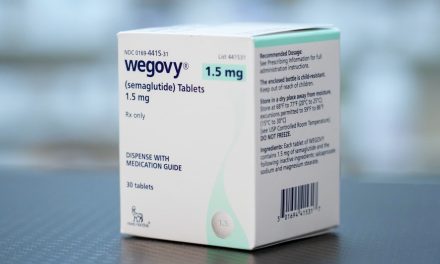
Both medications are extremely long-acting, meaning they remain active in the body longer than existing treatments such as Novo’s Wegovy, and can be taken once a month.
Pfizer plans to release more data on the Amylin drug during its medical conference in June. List said the company will move the product into phase two trials in the first half of this year.
Quarterly GLP-1 injection
Pfizer on Tuesday also touted a possible GLP-1 shot that would be administered quarterly – once every three months – rather than monthly or weekly.
List said the shot will be “extremely ultra-long acting,” so Pfizer will find a way to make the drug “break down more slowly in the human body, so it can certainly last longer acting” than PF′3944.
Chris Boshoff, chief scientific officer, told CNBC that the vast majority of patients would prefer an injection and “obviously a monthly injection is better than a weekly one, and probably a three-monthly injection is perhaps better than a monthly one.”
But List said it’s still early days for this drug.
Feel free to send tips, suggestions, story ideas and data to Annika at a new email address: annika.constantino@versantmedia.com.