












Paula Doress-Worters, an author of “Our Bodies, Ourselves,” dies at 87
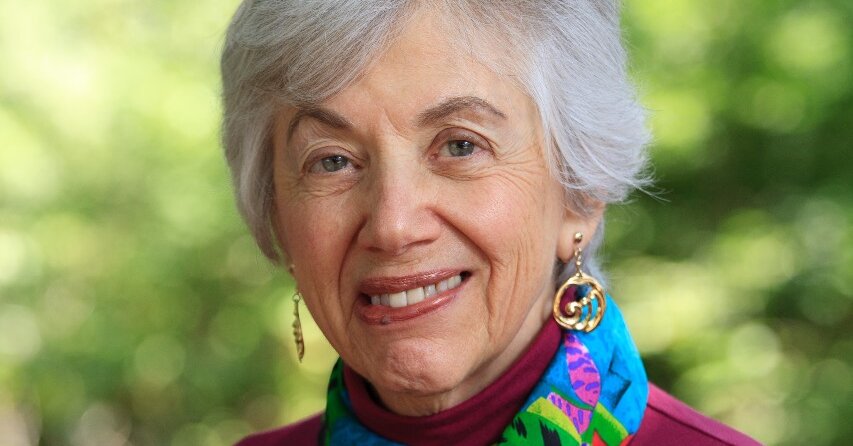
Paula Doress-Worters was in her mid-20s and still known as Paula Brown when she left her accounting job to become a community organizer. It was the early 1960s and she was horrified by the racism she had seen around her since she was a child in Roxbury, Massachusetts, when black families moved into her neighborhood.
She began working for a black congressional candidate and helping welfare recipients get the services they needed. She soon began advertising to mobilize resistance against the Vietnam War.
By the end of the decade, she expanded her involvement to include feminism and women’s health. She joined a group of young women, some of whom were new mothers like herself, who were confused by the sexism of the health care system—in 1960, only 6 percent of aspiring medical students were women—and by how it was failing them and how little they knew about their own bodies.
They set out to figure out how to address their own problems and began compiling an encyclopedia of women’s health, by women and for women.
They called themselves the Boston Women’s Health Book Collective, and when the New England Free Press published the first rough version of what would become Our Bodies, Ourselves in 1970, they had no idea they were creating something that would become a worldwide bestseller and cultural touchstone for generations of women.
In subsequent years, college students passed along dog-eared copies of the book like samizdat. Mothers would give it to their daughters instead of having “the talk.” Activist author Barbara Ehrenreich declared it a manifesto of medical populism. The Moral Majority, the Christian right organization founded by Rev. Jerry Falwell, declared it obscene.
Ms. Doress-Worters, a founding member of the collective, died on February 21 at her home in Redwood City, California. She was 87 years old.
The cause of death was pancreatic cancer, said her daughter Hannah Doress.
“Our Bodies, Ourselves” tackled all sorts of unspeakable topics like masturbation, birth control, and abortion, which was illegal in many states in 1970. There were helpful diagrams and pictures – including illustrations of six variations of hymens – as well as instructions on how to view your vagina with a mirror.
The women divided the topics. Ms. Brown – now called Ms. Doress after marrying Irvin Doress, a like-minded psychologist, in 1964 – and Esther Rome suffered from postpartum depression, a devastating condition that obstetricians of the time downplayed.
“It’s just the baby blues,” Ms. Doress’ doctor told her after her daughter was born. “You’ll get over it.”
She didn’t do that. She had been preparing for a natural birth, but was given the opioid Darvon during labor, which caused her to hallucinate, as happened to many women.
When she was home with her new baby, she became severely depressed and had periods of mania. She was again medicated against her will – she was proud that it took two doctors to subdue her and inject her with a sedative – and was hospitalized for three weeks. She had few memories of her time at the hospital, although she did remember calling for better pay for nurses using mini-posters she made from tongue depressors and index cards.
She could find no substantive popular books about her condition and no professional advice. However, in her own research, she discovered studies suggesting that postnatal depression was caused by a combination of factors: physical stress, isolation, hormonal imbalance and, most importantly, social stress – a response to the shibboleths of the happy mother, the myth of the maternal bond and the burden of gender roles. One study compared postnatal depression to fighting fatigue.
The chapter she and Ms. Rome initially wrote ran a scant 10 pages, “but it was tough,” wrote Rachel Louise Moran in “Blue: A History of Postpartum Depression in America” (2024).
In later editions of “Our Bodies, Ourselves,” they expanded the section to include more testimony from women who had suffered as Ms. Doress had, and proposed solutions up to the political level, including free child care and parental leave.
In her book, Ms. Moran described how in postwar America, the pain of new mothers was viewed as frivolous—and thus met with frivolous solutions promoted by women’s magazines: lose weight, buy a hat, try to be cheerful.
Feminists like Ms. Doress sought to legitimize and support women’s suffering by taking the baby blues seriously.
Paula Brown was born on August 27, 1938 in Boston to Jewish immigrants from Poland. Her mother, Ethel (Krauthamer) Brown, owned a children’s clothing store. Her father, Abraham Brown, also had his own business: a corner store called Lindy’s Spa that sold groceries and sundries.
Paula and her younger brother grew up in a railroad apartment in Roxbury, in a household of four adults that included their aunt and uncle, Jewish refugees from Vienna who had moved in with the Browns the year they were born, a month after Kristallnacht. The home was a stopover for many Jewish refugees fleeing Europe in the run-up to World War II.
After high school, Paula worked as an accountant and contributed to the household while attending evening classes at Suffolk University in Boston, where she studied political science. She graduated in 1962 with a bachelor’s degree. She earned a master’s degree in women’s studies from Goddard College in Vermont in 1981 and a Ph.D. in 1993. in social psychology from Boston College.
In 1971, a few years after she became Dr. After Doress married, they lived in a mini-community for a year: together with three other heterosexual couples and a single, they lived in a three-decker house – a typical apartment building in the Boston area – in which all the babies were housed together in one room.
The aim was to turn traditional gender roles on their head, for example by having men work in pairs to prepare dinner. How well they succeeded is lost in the mists of time.
Her marriage to Dr. Doress was divorced in 1979. In the early 1980s she met the engineer Allen Worters at a singles event. It was t-shirt night and he was wearing one that said “Single Dad.” She said, “Don’t ban our bodies.” Mr. Worters was blown away. They married in 1986. Mr. Worters died in 2005.
In addition to her daughter, Ms. Doress-Worters is survived by a son, Ben Zion; two stepchildren, Susan Worters Reel and David Worters; four grandchildren; and her brother Mendy Brown.
Ms. Doress-Worters has taught women’s studies courses at Emerson and Boston Colleges and the University of Massachusetts Boston, and in 2008 published “Mistress of Herself,” a compilation of writings by 19th-century women’s rights activist Ernestine Rose.
The nonprofit organization Our Bodies Ourselves, founded after the book’s publication, continues to provide health resources and information to women. It is now based at Suffolk University, Ms. Doress-Worters’ alma mater. The book, last updated in 2011, has sold more than four million copies and been translated into 34 languages.
In later editions, Ms. Doress-Worters contributed chapters on sexual relationships, parenthood, and women after midlife. This led to a spin-off entitled Ourselves, Growing Older (with two editions, 1987 and 1994), which she co-wrote with Diana Laskin Siegal.
“Paula wasn’t as confrontational as some activists,” said Judy Norsigian, another founder of Our Bodies, Ourselves. “But she spoke up when she needed to. And she always expressed concerns about the impact something might have on those who are most at risk: women of color, women of lower income. She had the sensibilities of a feminist even before, I think, she knew the word.”
In “The Movement: How Women’s Liberation Transformed America 1963-1973” (2024), an oral history of second-wave feminism by Clara Bingham, Ms. Doress-Worters recalled the collective’s first meetings, held in a building at Emmanuel College in Boston run by Catholic nuns.
“They thought we were just these nice girls,” she said of the nuns who generously donated her space. “They had no idea.”