












Eli Lilly Weight Loss Pill Orforglipron deletes the attempt and Ebnet possibility to permit

The Eli Lilly Biotechnology Center is in San Diego, California, USA, March 1, 2023.
Mike Blake | Reuters
Eli Lilly On Tuesday, his daily weight loss pill said to patients with obesity and type 2 diabetes in a study in the late stage, to achieve the main goal of the study and to clear the way for the company in order to submit the approval of the drug worldwide.
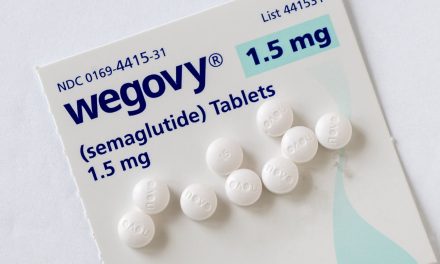
Treatment is approaching a new, needle-free alternative on the strongly lucrative market for weight loss and diabetes medication, which are referred to as GLP-1. More convenient pills could increase the offer for treatments and make them more easily accessible than the expensive weekly injections that currently dominate the room. In contrast to a similar oral treatment of the main competitor Novo Nordisk, the pill from Eli Lilly would not be associated with dietary restrictions.
Eli Lilly’s shares rose by more than 4%on Tuesday.
The highest dose of the pill, Offorglipron, helped the patient to lose 10.5% of their weight or 22.9 pounds on average after 72 weeks, compared to 2.2% weight loss in those who have taken a placebo. The weight loss of the drug in the study was 9.6% in the analysis of all patients regardless of the discontinuations.
Eli Lillys Pille achieved the other goals of the study to help patients to reduce their hemoglobin A1C, a measure of blood sugar levels. At the end of the study, most patients no longer fulfilled the criteria for type -2 diabetes based on this metric. The rate of side effects and treatment discontinuations in the study, which is referred to as acquisition-2, generally seemed to coordinate with two recently three studies on Eli Lilly’s medication in the phase.
Eli Lilly said that it now has the complete clinical test package that is necessary for the submission of approvals from the drug for chronic weight management in global supervisory authorities. The pharmaceutical giant expects the pill “this time next year” to start the world, CEO David Ricks told CNBC in early August.
In an interview, Eli Lillys Chief said scientific officer Daniel Skovronsky that the pill had “unprecedented effectiveness” in patients with obesity and type -2 -diabetes, which generally lose weight compared to patients without diabetes. Skovronsky said he hoped that diabetes patients can use the pill earlier in their illness to slow down.
Existing GLP-1 injections have shown a greater weight loss than Eli Lilly’s pill, but an oral option that offers more than 10% for patients with obesity and type 2 diabetes is “actually very good, so that is positive,” said Dr. Caroline Apovian, co-director of the Center for Weight Management and Wellness in Brigham and Women’s Hospital.
But she called it “in relation Novo Nordisk‘s Wegovy. Apovian said that patients and their prescribers have to take into account the risks and advantages of the pill and injections if they decide which should be received, including convenience, side effects and effectiveness.
More CNBC health insurance
The side effects of Eli Lilly’s pill were mainly gastrointestinal such as nausea and vomiting and were easy to moderate. An estimated 23.1% of those who took the highest dose experienced vomiting, while 36.4% or 27.4% had nausea or diarrhea.
For some reason, about 20% of the patients have taken the pill, which is approximately the same rate as the placebo group. Skovronsky said that this reflects a combination of reasons except side effects. These can include patients who wanted to stop participating in a study because they could access another drug of obesity, or patients who have not lost enough weight because they took a lower dose of the drug.
But he said most patients stay in the medication and said: “The most important thing here is the extent of the opportunity.” In the United States alone, more than 100 million adult obesity have, according to centers for disease control and prevention data.
Apovian said that she was most enthusiastic about an oral option that entered the market, not because she, how much weight loss she can promote, and her potential to expand access to obesity treatments, especially since a pill is much easier to produce than an injection. Apovian hopes that Eli Lilly’s pill is cheaper than the injections – which costs around $ 1,000 in front of the insurance company – and will receive wider insurance protection.
The results on Tuesday are the third sentence of data in the late stage, which the company published this year at Orforlipron. In April, the pill succeeded in a shorter phase three study with diabetes patients without obesity.
At the beginning of this month, the drug also achieved the goals of a separate study on patients with obesity and not in diabetes, but did not remain the expectations of Wall Street. The weight loss of the pill was higher in this study compared to the data on Tuesday, but in view of the differences in patient populations, said Dr. Jaime Almandoz, medical director of the weight -wellness program at UT Southwestern Medical Center.
Overall, some doctors have advertised the weight loss of the pill in the tests, and some analysts say that due to the factors such as simpler production and lack of food restrictions, it will still be a sustainable competitor in the room.
“The convenience and in particular the lack of fasting requirements and water restrictions with Orforlipron are probably one of the main difference features when people think about other mouth remedies that have a similar effectiveness for the change of weight and the A1C values,” said Almandoz.
He said a pill creates additional options for individual patient care, “where there is more autonomy”.
For example, some people could hesitate to take injections for weight loss, said Dr. Andrew Kraftson, Clinical Associate Professor at the Department of Metabolism, Endocrinology and Diabetes at the University of Michigan
“Although this is an overcome barrier for many, oral therapy matches traditional medication treatment and can have greater acceptance,” he said, adding that pills are less likely with short care.
Detailed test data
The study followed more than 1,600 people who were randomized to get three different target cans from Eli Lillys Pille or a placebo. The patients started in a lower dose of the drug and gradually increased it in four weeks to achieve their final target dose.
More than 50% of the patients with the highest dose of Eli Lilly’s treatment lost at least 10% of their weight in the study, while 28.4% of the participants lost at least 15%. In the different groups, the company did not know how many patients have lost at least 5% of their weight.
Orforglipron “may not be the answer” for patients who are pathologically overweight, said Howard Weintaub, clinical director of the center to prevent cardiovascular diseases at the NYU Langone Heart. But he said: “For many people who have to lose an appropriate weight, it can make a big difference to lose 10%.”
After an average of 1.3% to 1.8% in different doses after 72 weeks, Orforlipron lowered 8.1% in different doses after 72 weeks. Around 75% of the participants who took the highest dose achieved an A1C of 6.5% or less, which is on or below what the American diabetes associates defines as diabetes.
Eli Lilly’s pill also improved the most important cardiovascular risk factors.
“After the study, we have now studied with GLP-1 agonists who show that they reduce very important results, which I do as a preventive cardiologist every day,” said Weintraub. “I try my best to prevent them from having heart attack, stroke and death.”
Eli Lilly’s pill works similarly to the diabetes Pill Rybelsus from Wegven, Ozempic and Novo Nordisk on an intestinal hormone called GLP-1 to suppress the appetite of a person and regulate blood sugar. Novo Nordisk also requests the approval of an oral version of Wegovy, which could come by the end of the year.
But in contrast to these three medication, Eli Lillys Pille is not a peptide medication. This means that it is more easily absorbed by the body and does not require dietary restrictions such as Rybelsus or oral.
Correction: Dr. Andrew Kraftson is a clinical association professor at the Department of Metabolism, Endocrinology and Diabetes at the Michigan University. An earlier version wrote his name wrote.