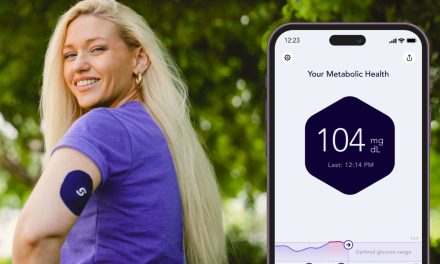

















Whoop says

The logo for the Food and Drug Administration is before a press conference to remove synthetic dyes from American food supply on April 22, 2025 in Washington, DC, in the Health and Human Services headquarters in Washington.
Nathan Posner | Anadolu | Getty pictures
The US Food and Drug Administration published a warning letter on Tuesday that was aimed at the Wearable Company Whoop at the wrist lawyer and claims that it is a new blood pressure function without proper approvals.
The letter is about whoops Blood printing Insights (BPI) feature, which the company introduced in addition to its latest hardware start in May.
According to the WHOOP, its BPI function uses blood pressure information to offer performance and wellness knowledge that provides consumers and improve sporting performance.
However, the FDA said on Tuesday that the BPI function of whoop is intended to diagnose, heal, treat or prevent diseases – an important distinction that would re -classify the wellness tracker as a “medical device”, which must undergo strict test and approval process.
“The blood pressure estimate is not a low -risk function,” said the FDA in the letter. “A faulty low or high blood pressure reading can have significant consequences for the user.”
A Whoop spokesman said that the company’s system only offers a single daily estimated area and a center that distinguishes it from medical blood pressure devices that are used to diagnose or treat high blood pressure.
According to the company, Whoop users who buy the “Whoop Life” subscription level in the amount of $ 359 can use the BPI function to get daily insights into blood pressure, including an estimated systolic and diastolic areas.
Whoop also demands that users record three conventional cuff readings in order to act as a baseline to unlock the BPI function.
In addition, the spokesman said that the BPI data is no different from other wellness metrics with which the company has to do. As the variability of the heart rate and the respiratory rate can have medical purposes, according to the speaker, they are also permitted in a wellness context.
“In this case, we believe that the agency exceeds its authority by trying to regulate a non-medical wellness function as a medical device,” said the whoop spokesman.
According to Dr. Ian Kronish, an internist and co-director of the Hypertension Center at Columbia University, is high blood pressure, also called high blood pressure, the top risk factor for heart attacks, strokes and other types of cardiovascular diseases.
Kronish told CNBC that Wearables such as Whoop are a big up -and -coming topic among high blood pressure experts, also because there are “concerns that these devices are not yet proven to be correct”.
If patients do not receive precise blood pressure values, they cannot make well -founded decisions about the care they need.
At the same time, Wearables such as Whoop presented a “big chance” for the patients to take more control over their health and that many specialists are enthusiastic about working with these tools.
Understandably, it can be confusing for consumers to navigate. Kronish encouraged the patients to talk to their doctor about how they should use wearables like Whoop.
“It is really great to hear that the FDA helps more to inform consumers,” said Kronish.
FileToto: The headquarters of the US Food and Drug Administration (FDA) can be seen in Silver Spring, Maryland, November 4, 2009.
Jason Reed | Reuters
Whoop is not the only portable manufacturer that researches blood pressure monitoring.
Omron and Garmin Both offer medical blood pressure monitoring with on-demand measurement values that fall under the FDA regulation. Samsung also offers blood pressure leading technology, but is not available on the US market.
Apple Also annoyed a blood pressure sensor for his watches, but could not deliver. In 2024 the Tech -Riese received the FDA permission for the detection of sleep apnea.
Whoop previously received an FDA Clearance for its ECG function, with which the electrical activity of a heart is recorded and analyzed in order to recognize potential irregularities in the rhythm. But when it comes to blood pressure, Whoop believes that the perspective of the FDA is out of date.
“We do not believe that blood pressure is more or less sensitive than other physiological metrics such as heart rate and respiratory frequency,” said a spokesman. “It seems that the concerns of the FDA can have outdated assumptions about the blood pressure, which is only a clinical domain and is inherently associated with a medical diagnosis.”
The FDA said who could be subjected to the WHOOP regulatory measures such as confiscation, injunction and civil allowance sentences if it is not tackled the violations that the agency identified in its letter.
Whoop has 15 working days to react with steps that the company has undertaken to remedy the violations and how it will prevent similar problems.
“Even BPI’s disclaimers do not change this conclusion, since they are not sufficient to outweigh the fact that the product should provide a blood pressure estimate through design that is inherently associated with the diagnosis of a disease or a state,” said the FDA.
REGARD: See CNBC’s full interview with the FDA Commissioner Dr. Marty Makary