















Ben Sasse sheds light on daraxonrasib for pancreatic cancer

Revolutionary drugs could be on the verge of a breakthrough.
The company expects to soon report results from a Phase 3 trial of its experimental drug, which could be the first targeted treatment for pancreatic cancer, the deadliest of major cancers. Only 13% of people with pancreatic cancer live five years after diagnosis, a number that hasn’t changed much, although the outlook for other cancers is improving thanks to new drugs like immunotherapy. The possibility of a new treatment has sent RevMed’s stock up nearly 185% in the last year and made the company a prime acquisition target.
“This is incredibly important,” said Leonid Timashev, an analyst at RBC Capital Markets. “Doctors have described this as possibly the biggest breakthrough in pancreatic cancer ever.”
RevMed came into the spotlight this week when former Senator Ben Sasse told the New York Times that he was taking the company’s drug, daraxonrasib. Sasse announced late last year that he had been diagnosed with stage four pancreatic cancer and had been given just three to four months to live.
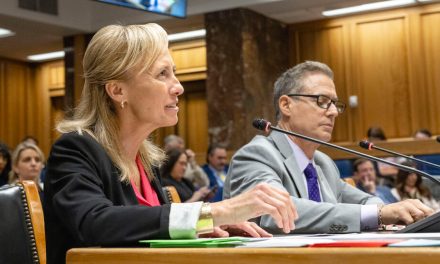
Senator Ben Sasse (R-NE) speaks during Attorney General nominee Merrick Garland’s confirmation hearing before the Senate Judiciary Committee, Washington, DC, February 22, 2021.
Al Drago | Pool | Reuters
Sasse told the Times that his tumors have shrunk by 76% since starting treatment, but he called it a “nasty drug” that causes “crazy” side effects like a rash. Sasse’s bloody, peeling face caused the interviewer to tell Sasse that he looked “terrible.”
RevMed’s daily pill largely targets RAS mutations, which drive tumor growth and are found in about 90% of pancreatic cancer cases. Timashev describes that RevMed’s drug goes to the core of what causes cancer.
This is both an advantage and a burden. RAS proteins are found throughout the body, especially in the skin. RevMed’s drug does not differentiate between the mutated and normal versions, leading to unpleasant side effects like those Sasse experienced.
A statement from RevMed said the majority of rash cases were of mild severity and no patient discontinued treatment because of it. The company added that reports of skin rashes with bleeding have been described anecdotally by clinical trial researchers and are considered rare.
Early on, RevMed wasn’t sure whether people would tolerate daraxonrasib because it was so broadly effective against all different forms of RAS, said CEO Mark Goldsmith. The company started with a “very, very low dose” and gradually increased it.
“We were annoyed by every escalation,” he said. “Every time the team said we were going to increase the dose, an older group of us sitting in a conference room just held our heads in our hands and thought, ‘Is this going to be it? Are we going to be able to go higher?'”
The company’s scientists predicted that tumors would begin shrinking at 80 milligrams, Goldsmith said.
“They had done the scientific work to predict that, and that’s exactly what happened,” he said. “We saw the first patient’s tumor shrinking and said, ‘Wow, our team is pretty good. They know how to predict this.'”
But proof that the drug shrinks tumors likely won’t be enough to win approval from the U.S. Food and Drug Administration. Goldsmith said the agency has made it clear privately and publicly that RevMed must demonstrate that daraxonrasib can keep people alive longer, which the medical community considers to be demonstrably beneficial for overall survival.
The extent of this advantage could have a significant impact on how widely the drug is used and how the company’s stock reacts to the current data. RevMed expects to release data this quarter from a Phase 3 trial examining the pill versus chemotherapy in people whose cancer has spread and who have already tried another treatment.
Analysts at RBC Capital Markets laid out their base case in a note to clients on Friday, predicting the stock would rise 25% to 40% if RevMed’s drug demonstrated an overall survival benefit of more than 13 months and reduced the risk of death by half compared with chemotherapy. The drug’s failure in the Phase 3 trial would be an “incredible disappointment,” Timashev said, an outcome he considers unlikely. A more likely risk, in his view, is that the drug doesn’t deliver the big benefits that investors expect.
Part of the recent rise in RevMed shares has come from speculation about a takeover of the company, with Merck reportedly mulling a deal earlier this year.
Goldsmith said RevMed isn’t paying much attention to “external noise” and is focused on building the company.
“We know that pharmaceutical companies are very interested in what we do,” he said. “Either they try to copy it or they try to get it. And things like that happen around us. Sometimes there are rumors.
Choose CNBC as your preferred source on Google and never miss a moment from the most trusted name in business news.